Archive for Scandinavia
The Norse Code
Posted in Books, pictures, University life with tags admixture, ancestry, Celtic myths, coalescent, cover, DNA helix, European populations, genomic history, medieval Europe, Nature, population genetics, Scandinavia, Scandinavian ancestry, simulation, The Norse Farce, Twigstats, vikings on February 3, 2025 by xi'an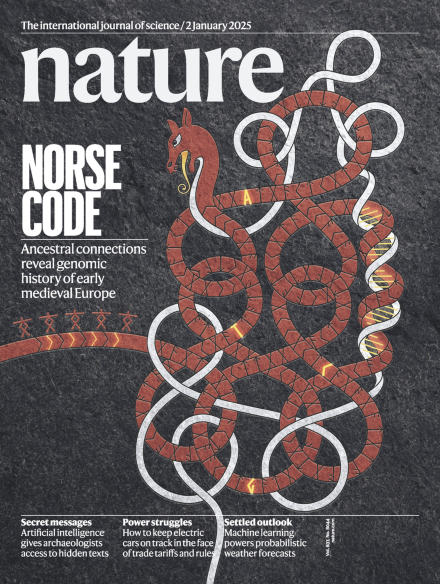
les sentiers des astres [book review]
Posted in Books, pictures, Travel with tags Bard, Celtic myths, fantasy, Hindu myths, Japan, Les Sentiers des Astres, Robin Hobb, Scandinavia, Stefan Platteau, writing style on November 18, 2019 by xi'an
It is quite rare that I read heroic fantasy or science fiction in French, presumably because I do not spend enough time in Parisian bookstores… Thanks to a visit to Librairie Compagnie, rue des Écoles, last July, storing enough travel books for Japan, (incidentally) all of which made it back home by post today!,  I came across the books of Stefan Platteau as a suggestion from a bookseller there as a mix of Robin Hobb and Tad Williams, with connections to Celtic, Scandinavian, and Hindu myths. And styles. I actually see some inspiration from Hobb’s Chaman soldier, in the role of supernatural forces, less of Williams, as the series is shying away from heroic fantasy and military actions, even though a war is going on, but mostly fought by irregulars and partisans.
  The style is quite original, way better than Hobb’s Rain wilds chronicles, with a rich prose and tales within tales said (sang?) by several characters. And the story definitely compelling if sometimes slow—a consequence of the subplots being exposed as fireplace stories, with a larger role of god-like entities that roam this universe, but in a pleasant and balanced way. The characters are all ambiguous enough to preserve a degree of surprise and of unexplained as the story unravels. It is unfortunate the books have not been translated into other languages, as these trails of the stars are remarkable enough to recommend! In particular, while there is a very small number of women involved in the stories, the Tale of the Courtesan is most central to both second and third volumes, with a very strong passage on her pregnancy in the most dire circumstances. A non-spoiler warning is that the end of the book is very abrupt and unconclusive, making it sound as if a new volume is in the making, not that I could find any trace of an hint about a sequel. Not that it proves detrimental to the pleasure of reading this unusual series.
delayed-acceptance. ADA boosted
Posted in Statistics with tags ABC, delayed acceptance, Gaussian processes, MCMC, particle MCMC, Scandinavia on August 11, 2019 by xi'an Samuel Wiqvist and co-authors from Scandinavia have recently arXived a paper on a new version of delayed acceptance MCMC. The ADA in the novel algorithm stands for approximate and accelerated, where the approximation in the first stage is to use a Gaussian process to replace the likelihood. In our approach, we used subsets for partial likelihoods, ordering them so that the most varying sub-likelihoods were evaluated first. Furthermore, if a parameter reaches the second stage, the likelihood is not necessarily evaluated, based on the global probability that a second stage is rejected or accepted. Which of course creates an approximation. Even when using a local predictor of the probability. The outcome of a comparison in two complex models is that the delayed approach does not necessarily do better than particle MCMC in terms of effective sample size per second, since it does reject significantly more. Using various types of surrogate likelihoods and assessments of the approximation effect could boost the appeal of the method. Maybe using ABC first could suggest another surrogate?
Þe Norse farce [design #2]
Posted in Kids, Mountains, pictures with tags Þe Norse face, þ, design, helmet, parody, Scandinavia, thor, Viking helmet, ye Norse farce on November 19, 2018 by xi'an


postdocs positions in Uppsala in computational stats for machine learning
Posted in Kids, pictures, Statistics, Travel, University life with tags Bayesian inference, Birch, computational statistics, machine learning, position, postdoctoral position, probabilistic programs, Scandinavia, sequential Monte Carlo, Sweden, Uppsala University, variational inference on October 22, 2017 by xi'an Lawrence Murray sent me a call for two postdoc positions in computational statistics and machine learning. In Uppsala, Sweden. With deadline November 17. Definitely attractive for a fresh PhD! Here are some of the contemplated themes:
(1) Developing efficient Bayesian inference algorithms for large-scale latent variable models in data rich scenarios.
(2) Finding ways of systematically combining different inference techniques, such as variational inference, sequential Monte Carlo, and deep inference networks, resulting in new methodology that can reap the benefits of these different approaches.
(3) Developing efficient black-box inference algorithms specifically targeted at inference in probabilistic programs. This line of research may include implementation of the new methods in the probabilistic programming language Birch, currently under development at the department.


