Archive for student fees
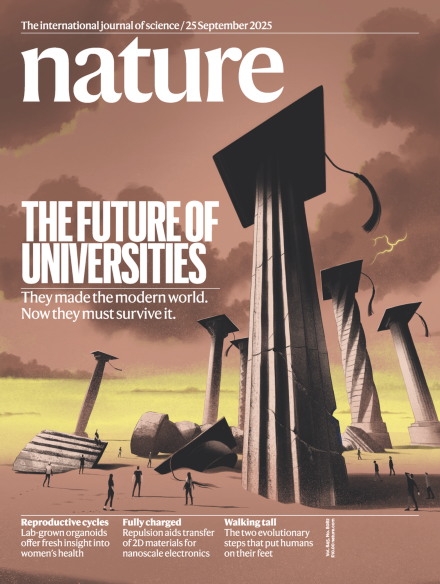
Nature tidbits [25 Sept 2025]
Posted in Books, Kids, University life with tags Agent Orange, China, cover, foreign students, Hereford, heresy, medieval Europe, Nature, NMITE, NYT, student fees, Trump administration, UK universities, US universities on October 29, 2025 by xi'anbanKrUpt, franc’route
Posted in Kids, pictures, Travel, University life with tags bankruptcy, Brexit, college ranking, Coventry, COVID-19, foreign students, French government, French politics, inflation, Labour, Le Monde, Nature, PhD course, Russian invasion, Scotland, Shanghai ranking, student fees, tuition fees, UK Government, UK politics, UK universities, Université Paris Dauphine, University of Coventry, University of Warwick on November 14, 2024 by xi'anRead in both Le Monde (Sept) and Nature (26 Sept) concerning articles about the poor financial state of many higher education institutions in the UK, if not the most prestigious ones… (Warwick being so far preserved from that issue, if not the neighbouring University of Coventry.) Up to 80% of French universities—prestigious and less prestigious alike—are also facing repeated deficits, for several years in a row, if mostly for different reasons besides the after-effects of COVID and the economical crisis amplified by the Russian invasion.
 The main difference (between France and Britain—minus bonnie Scotland!) is in the UK government not providing direct support to higher education institutions, treating them as businesses that must make a profit on average to survive. To add insult to injury, the short-sighted Sunak Government has strongly reduced the number of foreign students (that they considered immigrants) when those are a key component of the universities business models since they pay much higher fees compared with the capped fees for UK nationals. Surprisingly (to me), the new Labour government does not intend to change either policy. The more surprising (to me) when the first institutions to fail will be (are?) those concentrating students from less privileged backgrounds. Quite paradoxical for a party with social ideals and socialist roots. Besides, repeated reductions of the attractivity of Britain for higher education may reach a no-return point in terms of its (World first-tier) scientific productivity.
 France is financing its universities for 60% of their budget, while tuition fees in national universities (that do no include Paris Dauphine) are nominal for EU students (and special cases like PhD programs). Progressive cuts have led to tighter budgets, more deficit, with limited alternative sources of financing, since raising students fees is completely taboo. Added to academic positions being little attractive (for offering comparatively low salaries), this abides poorly for France keeping being part of top higher education countries. (It already figures very rarely in the country comparisons produced by Nature on an almost weekly basis.) The new higher education minister is known for pushing towards more “autonomy” (read less financing) of universities and the current State deficit may prove the tipping point for cutting further State support for public higher education institutions at large and fundamental research.

French universities in poor conditions
Posted in Kids, University life with tags budget, COVID, French universities, Le Monde, student fees on June 8, 2024 by xi'an
Le Monde is sketching a pessimistic picture of the budgetary woes of (most) French universities, unable to maintain their buildings and even less to expand to accommodate an ever growing student population. Or to increase their faculty population. Meaning that more than half of the courses are delivered by temporary teachers. Budgets are now going down because of reductions decided by the current government to recoup the post-COVID spending frenzy. Not a single mention is found in these articles about the connection with essentially negligible fees, as well as with an unrestricted access to higher public education that results in wasted years for both students and institutions…
another borderline conference
Posted in Kids, University life with tags conference fees, EUSIPCO 2015, IEEE, IEEE Xplore, Nice, signal processing, student fees on June 25, 2015 by xi'an Following yesterday’s surprise at the unpleasant conference business run by WASET, I was once again confronted today with conference fees that sound like an unacceptable siphoning of research funds and public money. One of my PhD students got earlier personally invited to present a talk at EUSIPCO 2015, a European signal processing conference taking place in Nice next September and she accepted the invitation. Now, contrary to yesterday’s example, this EUSIPCO 2015 is a genuine conference sponsored by several European signal processing societies. From what I understand, speakers and poster presenters must submit papers that are reviewed and then published in the conference proceedings, part of the IEEE Xplore on-line digital library (impact factor of 0.04). As the conference is drawing near, my student is asked to register and is “reminded” of small prints in the conference rules, namely that “at least one author per paper must register by June 19, 2015 at the full rate”, student or not student, which means a 300€ difference in the fees and has absolutely no justification whatsoever since the papers are only processed electronically…
 I checked across a few of the past editions of EUSIPCO and the same rip-off rule applies to those as well. I see no rational explanation for this rule that sounds like highway robbery and leads to the de facto exclusion of students from conferences… In fine, my student withdrew her paper and participation at EUSIPCO.
it’s a bird… it’s a plane… ISBA deal!
Posted in University life with tags BayesComp, ISBA, O'Bayes, sham-wow, society, student fees on September 26, 2013 by xi'an


As elections for ISBA officers are getting near, I (and every other ISBA member) got an email from Steve Scott reminding us to renew our membership. (Not that I really need it being a lifetime member!) The deals offered by Steve (ok, by ISBA!) are that the renewal fees remain at the 2013 rates till the end of the year. And that those who missed the 2013 renewal get the year free! For new members, the rates are as follows:
with an interesting (?) adjustment for lifetime membership: under 50, you have to add $50 for every year under 50, which sounds a bit of a deterrent! Note the great rate for students. (And check my earlier blog on why joining a statistical society.) And consider joining BayesComp and O’Bayes if you have not yet done so!
Steve added a most obscure disclaimer to his email: No sham-wow’s were harmed during the making of this email. Which forced me to watch this commercial video about super-duper (or not!) towels…


