
Archive for British Columbia
Lake Washington sunrise [jatp]
Posted in Mountains, pictures, Running, Travel with tags British Columbia, Canada, jatp, Lake Washington, morning run, open water swimming, otter, outdoor swimming, Pacific North West, Puget Sound, seals, Seattle, sunrise, University of Washington, Washington State, wildfire on August 22, 2024 by xi'an
JSM 2024, Portland, miniday 4
Posted in Books, pictures, Running, Statistics, Travel, University life with tags AI, American Statistical Association, ASA, Bayesian decision theory, Bayesian nonparametrics, Bayesian privacy, BIRS, British Columbia, classification, contextual integrity, data science, differential privacy, draw bridge, ERC, federated learning, generalised Bayesian inference, Joint Statistical Meeting, JSM 2024, Kelowna, Ocean, open water swimming, Oregon, Pacific North West, Portland, Seattle, United States of America, University of Washington, Willamette River on August 11, 2024 by xi'an
Final (half)day at JSM is always a sad thing as most people have left, people are busy dismantling booths and packing boxes, and the few remaining participants are fidgety and sitting on their suitcases (there may have been more suitcases than people in the main area that day!), cafés are minimally staffed or simply closed. Hence not the best time-slot to deliver one’s talk! Still, a few dozen people attended our session. The session topic was Bridge the Gap: Differential Privacy and Statistical Analysis, organised by Bei Jiang whom I met last summer in Kelowna, at a BIRS workshop on privacy. Where I spoke on setting up a complete decision-theoretic framework, as developed (and still in development) within our Ocean group, esp. Joshua Bon, Stan du Ché, and Judith Rousseau. (Rather than on the original plan of talking about convergence versus privacy, as a criticism of differential privacy.) The other talks were by Shurong Li, strongly set with differential privacy when record linkage is present, and Xuan Bi on a fully decentralised federated learning with local exchanges of global gradients that limit privacy leaks. (With a mention of gossip learning I hadn’t seen previously!)

I enjoyed even more the session due to Naisyin Wang giving a discussion on the three talks, in closes the particular because I had not seen her in years, if a few times since she was my teaching assistant in Cornell in a Bayesian decision theory class I was building on the spot (with Linda Zhao as a student!). Which nicely closes the loop given the topic of my talk, of which she was quite supportive! While calling for debiasing post-processing and wondering about a two-dimensional decision theoretic perspective rather than a unidimensional one under hard privacy constraints.

On the way out, after parting from the few friends remaining in the convention centre, I spotted the nearby (steel) bridge being raised, although I could not see the boat responsible for it. I had been unaware of this possibility while running over and under it, as well as swimming thrice under it. And we left Portland in the early afternoon, heading for Seattle and a celebration of Adrian Raftery’s career.
Jasper half-gone
Posted in Mountains, pictures, Travel with tags Alberta, Banff, British Columbia, Canada, Canadian Rockies, Jasper, Jasper National Park, Lake Louise, Maligne Lake, mass destruction, wildfire on July 27, 2024 by xi'an
Nature tidbits
Posted in Books, Kids, Statistics, Travel, University life with tags AI, AI Act, British Columbia, cognitive biases, common mycorrhizal networks, conferences, Data science for social good, developping countries, Ecology, error correcting codes, EU, European Union, forestry, fungal science, gender inequalities, Himalayas, image generator, India, ISBA 2024, mother tree, murmuration, Nature, Pakistan, quantum comuting, qubit, racism, TED talk, The Guardian, training data, trees, University of Warwick, Venezia, visa, Wood Wide Web on June 10, 2024 by xi'an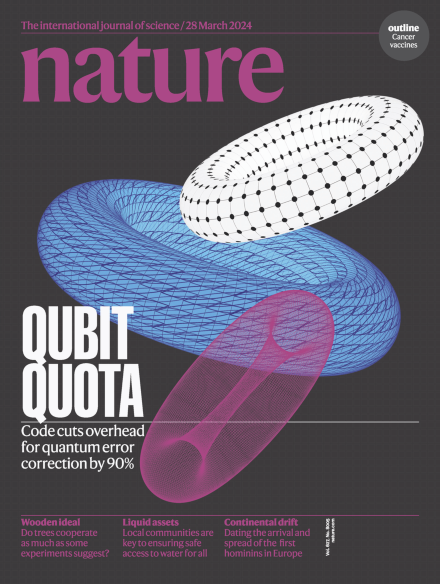
In News in focus, the development of a revolutionary (CAR-T) cancer therapy by a Munbai company at 1/10 the cost of similar products in the US, with several impressive innovations (and a clinical trial over 33 people). The coverage of Michel Talagrand’s 2024 Abel prize, the deteriorating state of scientific research in Russia, a review on how the Big Bang got its name (hint: it was on BBC 3), and remembering India’s Chipko tree-hugging women of Western Himalayas of 50 years ago. The development of signs for scientific terms to add to the Indian and American sign languages.
 There is also an almost sleuthing story on the debates in the ecology community about the theory of “Mother Tree”, introduced by Suzanne Simard, about trees communicating among themselves by underground fungal networks, and thus creating a “wood wide web“. With mature trees favouring their own kin, a theory that critics in the field deem incompatible with evolutionary theory and more crucially missing supporting evidence. (Arguments from Simard that “the European male society hates the mother tree” concept do not help towards a rational denate. The Guardian now has a podcast about this debate.)
 And another story on the (racial and gender) bias of AI image generators. With the conclusion that removing such biases goes through open sourcing. And regulation like the EU’s AI Act. that requires technical documentation on the training datasets. Plus a retrospective on the theory of bird-flight origins, with John Ostrom proposing in 1974 that the evolution to flight was ground-up rather than tree-down.
A cover-paper on IBM error correcting code for quantum computing that only requires each qubit to connect with six others (just like birds in murmuration only keep track of seven neighbours) for an error threshold less than 1%. (With the property that 12 logical qubits can be preserved for 10⁶ cyclces using 288 qubits in total.)
Philosophies, Puzzles and Paradoxes [book review]
Posted in Books, pictures, Statistics, Travel, University life with tags A Treatise on Probability, Bayesian inference, Bill Reid, book review, British Columbia, Canada, cedar, CHANCE, David Hume, Enlightenment, epistemic probability, First Nations, frequentist confidence, Haida culture, Henri Poincaré, incompleteness theorem, jatp, John Maynard Keynes, Kurt Gödel, likelihood, Likelihood Principle, marginalisation paradoxes, Maurice Allais, Monty Hall problem, Museum of Anthropology, paradoxes, Philosophy of Science, prior selection, puzzle, raven, Significance, Tintin, UBC, University of British Columbia, Vancouver on May 25, 2024 by xi'an Yudi Pawitan and Youngjo Lee have written a book that recently caught my attention within the CRC Press list of new publications. Because philosophy, puzzles, and paradoxes are definitely of interest to me (as shown by numerous entries in the ‘Og!). The subtitle of said book is A Statistician’s Search for Truth.
 Reviews of the book are already available, with for instance Andrew Gelman stating that he disagrees “with much of this book, but it’s an entertaining and thought-provoking introduction to some challenging questions” or Stephen Senn starting the foreword with “This is a remarkable book: wide-ranging, ambitious, challenging and profound but also intriguing, fascinating and original.” (Senn is also cited within the book for his discussion of our revisit of Harold Jeffreys’ Theory of Probability.) Nice cover as well (albeit I could not trace the origin of it, inside or outside the book.)
 The book is made of three parts, one on the philosophical approaches to truth, scientific discovery, deduction, and induction, a second one on probability theories, with philosophical motivations, Bayesian inference, and likelihood-based inference, and a third section on paradoxes. Given that both authors are senior authors who have contributed to likelihood inference throughout their career, incl. the books In All Likelihood and Generalized Linear Models with Random Effects, the likelihood approach is somewhat privileged against other statistical resolutions towards the resolution of the paradoxes, with a defence of confidence distributions and a chapter on epistemic confidence that mostly stems from recent papers by the authors, like Pawitan et al. (2023) and Lee and Lee (2023). I find the discussion therein somewhat unclear, esp. because the same notation Pr(.) is employed for different probability notions.
“Epistemic confidence is the objective measure of uncertainty that’s attached to single events, where the objectivity is based on a consensus of rational minds.” (p.197)
The philosophy part is following the (European) Enlightenment in producing more and more involved discussions on reason, knowledge and scientific discovery. This exploration is an easy read, as it does not delve particularly deeply in the arguments of Kant, Hume, or Popper. With the apparently unescapable mention of Gödel’s incompleteness theorem, including a sausage citation from Poincaré that reminded of that strip from Tintin in America: which, most probably, he would have applied to Ais! Several sections about pseudo-rational attempts to demonstrate the existence of Dog could have been skipped as well.
The part of probability already considers paradoxes which, like the subsequent ones are mostly the consequence of using natural (and hence ambiguous) languages instead of mathematical descriptions—incl. the statement of the Likelihood Principle. It also discusses Keynes’ logical (or imprecise) probabilities, briefly if appropriately given the pessimistic views of young Keynes on the assessment of the probability of an event. Savage is privileged enough to enjoy an entire chapter discussing his 1950’s axioms leading to the existence of a (subjective) prior on “the states of the world”. This is followed by a chapter on Inverse probability (aka Bayesian statistics), where the authors consider Bayes’ 1763 Essay to have stayed mostly unnoticed till the beginning of the 20th Century, which sounds a somewhat subjective judgement. (And as uncovered by Steve Stiegler, the original title of the Essay was indeed intended as a reply to Hume.) A further if short chapter is dedicated to the search for the prior distribution. Which thus gives the misguided impression that there should exist such a thing, rather than acknowledging that Bayesian statements are relative to the prior measure. The remainder of the discussion on invariant and reference priors is however mostly standard. Except when falling for the marginalisation paradox when stating that a product of improper priors implies independence on p.144.
The paradoxes examined in the final part are Allais’ (an alumni of Lycée Lakanal!), and Ellsberg’s, avatars of the Saint Petersburg paradox and referring to failing to adhere to rational decision-making and not in the least to statistics. Conjunction and inclusion “fallacious fallacies”, which are central to Kahneman’s Thinking fast and slow bestseller, and attributed to reasoning in terms of likelihood rather than of probability (without accounting for multiple testing on p.228). A whole if short chapter on the Monty Hall and three prisoners paradoxes, another predictable occurrence in a book on reasoning paradoxes. Again mostly a matter of poor wording, plus relying on the choice of an underlying probability model, for which the authors again follow a likelihood approach, the number of the prize door or of the freed prisoner being the parameter. Kyburg’s (very weak) lottery paradox and related forensic paradoxes, concluding with the rejection of judgements based solely on probability reasoning. Hempel’s paradox of the ravens, a priori unrelated with statistical evidence, but turned into one by squeezing in some sampling models. Finishing with the (envelope) exchange paradox, where the authors refuse to put a prior on the unknown parameter but end up with a solution equivalent to adopting a Jeffreys prior.
In conclusion, this attempt at connecting statistical inference and philosophy, probability concepts and rational decision making, paradoxes and modelling, within a single book is academically sound and overall enjoyable, if not outstanding or remarkable as it does not constitute a radical move away from existing analyses of those classical paradoxes. Furthermore, I find the paradoxes overwhelmingly distant from genuine statistical settings and involving a rather stretched notion of data. Still, methinks I will keep this book in my bookcase, rather than leaving it for the taking in the department coffee room!
As I was completing the book and getting towards writing this book review, I also noticed a two page blurb in Significance (May 2024 issue) written by the authors on their book. (which happens rather frequently with this magazine). Unsurprisingly, the contents provd mostly extracted from the preface and introduction With a nice ravens picture (in conjunction with the raven paradox).
[Disclaimer about potential self-plagiarism: this post or an edited version may eventually appear in my Books Review section in CHANCE.]


