Archive for NSF
heading south [cover]
Posted in Books, pictures, Travel, University life with tags America, Bering Strait, cover, demographic history, ERC, EU, Europe, First Nations, genetic analysis, genomic history, headdress, indigeneous Americans, Latin America, natural selection, Nature, NSF, population genomics on June 4, 2026 by xi'an
a journal of the [new] year of the [old] plagues [defrozen post!]
Posted in Books, Kids, Mountains, pictures, Running, Travel with tags avocado, Black Plague, book reviews, COVID-19, cuisine, Daniel Craig, Daniel Defoe, detective stories, draft, guacamole, Journal of the Plague Year, NSF, octopus, Russian invasion, Scottish crime novel, Sevilla, tartan noir, Ukraine on April 12, 2026 by xi'an[I wrote a first draft of this journal post mid-December 2025, just before flying to Sevilla, and just realised now that I had not published it! Hence the bizarre title. As a weird coïncidence, this is the second post where I associate Knives out and guacamole… A post also served cold, then. And hopefully not stale!]  Read the most recent Rankin’s Rebus (#25), Midnight and Blue, taking place in an Edinburgh jail, where Rebus
Managed to confuse guacamole with soup while cleaning my freezer from long-time, anonymous, residents, which made the guacamole sour if manageable (with another ancient resident of said freezer, some octopus tentacles!).
Watched the third film in the Benoît Blanc series (Knives out), Wake Up Dead Man. Which was agaaaain of a Cluedo style, with caricatures of all characters, except for the punching priest, who manages to save the (soul of the) story, putting Blanc and his mannerisms in the background. If not in the grave (which remains a central piece of the scenario, along the church!)
lost science
Posted in Books, pictures, Statistics, Travel, University life with tags @ScientistTrump, Agent Orange, book review, capitalism, China, globalisation, grants, greed, indirect costs, liberalism, mirror workshop, Mondrian forests, nationalism, Newspeak, NIH, NSF, public funding, student visa, Texas Chainsaw Massacre, Trump 2.0, Trump administration, UCS, University of Ottawa, US Congress, US research on February 22, 2026 by xi'an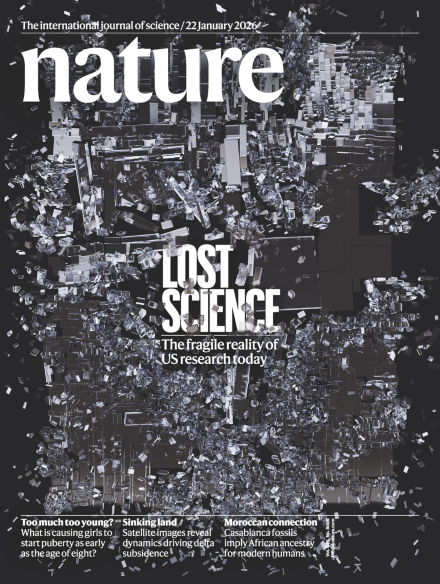
On the 2026 US budget prospects, the battle between the Trump administration and the US Congress will a.s. (hopefully!) continue, incl. the cuts to indirect costs, the politisation of grant panels, the drop in foreign student applications and conference attendees. The maps are making much more sense through Nature interactive page than on paper. Since the Mondrian-like maps that represent grant cuts and cancellations according to state, funding source (NIH, NSF—from which direction our Ottawa U friend Panchanathan resigned last April), court reinstatement, and topics. Still, the dynamic change of colours and the lack of scale make these poor or even terrible graphs. Over-optimistic scientists consider reimagining higher education towards public needs (to be distinguished from populist and conspirationist calls on which ground?!), turning to philanthropic support (with highly uncertain long-term prospects, seeing how quickly high-tech moguls turned their jackets under Orange pressure!), and the remaining entries are just wistful thinking… The UCS (Union of Concerned Scientists) is reported documenting 536 attacks of the Trump administration on science and scientific integrity, not counting harassment and intimidation, but this pales against the several thousand federal scientists who have fired and the remaining ones who (still) work in federal agencies under several swords of Damocles, from abruptly cut funding, to newly prohibited domains of research, like health disparities and sexual diseases, to firing, and to visa cancellation… Not a comforting read, this 22 Jan issue of Nature, when realising how massive, deep, long-term-impacting, the havoc the Trump administration has wreaked (or wrought!) on science as much as economy and international relations.
a journal of the [end of the] chaos year
Posted in Books, Kids, Mountains, pictures, Running, Travel, Wines with tags Agatha Christie, BBC Radio n4, Berlin, Black Plague, book reviews, California, Cambodia, COVID-19, crow, cuisine, Daniel Defoe, detective stories, fantasy, Frankenstein, horror, horror story, Indian food, Japan, Japanese cinema, Jotunheimen, Journal of the Plague Year, King Olaf, Kumano Kodō, Lancashire, Lenin, melodrama, North Korea, Norway, NSF, olive tree, restaurant, Russian invasion, Scandinavian Mountains, short stories, South Korea, Tokyo, Trondheim, Ukraine, Yatagarasu, Yorkshire on December 31, 2025 by xi'an Read the delightful Barrowbreck by Andrew M Hurley, a great collection of short stories is made coherent by its unity of place, a lost, dark, valley between Lancashire and Yorkshire. The stories unfold from the Bronze ages till a near and disastrous future. While the book is often presented as horror fiction, I rather see it as an exploration of an alternate reality, a fantasy just outside our own world. Not inducing dread or unease in the reader. The author demonstrates great skill in setting substantial characters and situations within a few pages, in translating the inner feelings of highly diverse people and, above all, in refraining from providing a definite conclusion to his stories. Some of them are striking enough to remain in my memories for a while!


Apart from an Indian-style vegetable six dishes feast, did not experiment much in the kitchen, in part due to my travelling one week out of two between November and December. But harvested and prepared my olives after collecting about 3 litters of them. (I also tasted a Banh Chhev (in Petit Cambodge, Paris but it failed short from my expectation, neither crispy nor sizzling. And cold.)
Watched As You Stood By, a Korean drama about domestic violence. And then Last Samurai Standing. Adapted from the novel of the same name written by Shogo Imamura. And the rather hilarious movie Good News, a South Korean disaster black comedy film playing a similar trick to Good bye Lenin. Gave up watching an unlucky series of terrible films and TV series. From the cheezy A Man on the Inside (which surely makes Agatha Christie cringe in her grave), to Ichikei’s Crow (a highly unrealistic sequence of near-judicial errors in a Tokyo tribunal, with the redeeming feature of a three-leg crow logo, Yatagarasu, also a guardian on the Kumanokodo), to the pretentious Frankenstein by Guillermo del Toro (where over-prefect Victorian tableaux and crepuscular lighting games kill the scenario even before it is brought to life by Dr. Frankenstein’s steampunk apparatus, aka, the mélo chokes the drama!), to Troll 2, even worse than Troll, pulling on the very same strings as the first film, with the very same house eviscerated again by another strolling troll!, as well as a complete disregard for archaeological dig rules and with the ultimate lame resort to holy water! Catching a few views of the Jotunheimen peaks, though (which we hiked 35 years ago).
a journal of the extremes year
Posted in Books, Kids, Mountains, pictures, Travel, Wines with tags Bengaluru, Black Plague, book reviews, COVID-19, cuisine, Daniel Defoe, economists, English PEN Award, HoD, Indian literature, International Booker Prize, Journal of the Plague Year, Kannada, Karnataka, Lake Washington, Man Booker Prize, Muslim societies, Mysuru, Narendra Modi, NSF, Russian invasion, sociology, translation, Ukraine, University of Washington, UW on December 9, 2025 by xi'an Read Carrying on by Stewart Tolnay, for no clear reason a posteriori! The story centres in a successful sociology senior professor in an imaginary university in Seattle (which also appears in the 1996 Sentinel), who finds himself arm-bent into becoming the new HoD and the subsequent difficulties he faces against some contrarian colleague. While this should obviously appeal to me, and despite the novel being written by a former faculty at Udub, the scenario quickly plummets down to unimaginable depths of boredom and suspension of belief. The main character is transparent, with a whining tendency and a personality as solid as a sodden marshmallow, and the other ones are almost uniformly caricatures as perfect representatives of minorities. Without getting into spoiling details, the main antagonist to this unlikely HoD conveniently accumulates all “qualities” a colleague should not possess, with an unrealistic ability to cross most of the department. More glaringly, research seems unimportant, except when applying for an NSF grant or when attending a conference where the future HoD behaves in a most unethical way imho. Add to this an endless accumulation of details about a new dog acquired by the HoD to recover from a divorce (!) and the collection of all the menus enjoyed by the HoD and his friend, and there is no compelling reason to carry on.
Also read Heart Lamp: Selected Stories, the Winner of the International Booker Prize 2025 jointly received by Banu Mushtaq, the author of the short stories in Kannada and Deepa Bhasthi, her translator into English. A beautiful, moving, profound book that builds on the everyday woes of Karnataka Muslim women to expose the wrongs of a deeply patriarchal society that denies freedom and autonomy to women. The writing style is deceptively set at a narrative level that could be found in mundane conversations, with a powerful translation, grounded in collaboration with the author, keeping some words from the original, that is prize-worthy by itself!, but may mean readers from other cultures missing some aspects of the book. In the postface, the translator Deepa Bhasthi exposes her difficulties and choices, pointing out at the differences in the Kannada versions both women speak. The Booker recognition is both definitely richly deserved for a unique piece of literature and for signaling the richness and diversity of Indian literature that Modi’s goons would like to replace by an Hindu monoculture.


