
Archive for deep learning
Nature tidbits [the Bayesian brain]
Posted in Statistics with tags ABC, deep learning, DeepMind, desert locust, Harvard University, Human Genetics, Isaac Asimov, memristors, neural network, NeurIPS, p-values, SNPs, UCL, University College London, Vancouver on March 8, 2020 by xi'anNature snippets
Posted in Statistics with tags Boris Johnson, Brexit, Canary Islands, China, confounders, deep learning, eugenics, Hawaii, Japan, Mauna Kea, Nature, Spain, tiger mosquitoes, tribune on October 1, 2019 by xi'an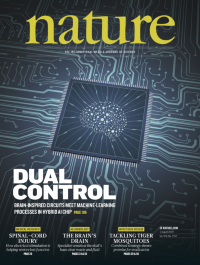
Among other news, Indonesia following regional tendencies to nationalise research by forcing foreign researchers to have their data vetted by the national research agency and to include Indonesian nationals in their projects. And, although this now sounds stale news, the worry about the buffoonesque Prime Minister of the UK. And of the eugenic tendencies of his cunning advisor… A longer article by Patrick Riley from Google on three problems with machine learning, from splitting the data inappropriately (biases in the data collection) to hidden variables (unsuspected confounders) to mistaking the objective (impact of the loss function used to learn the predictive function). (Were these warnings heeded in the following paper claiming that deep learning was better at predicting kidney failures?) Another paper of personal interest was reporting a successful experiment in Guangzhou, China, infecting tiger mosquitoes with a bacteria to make the wild population sterile. While tiger mosquitoes have reached the Greater Paris area, and are thus becoming a nuisance, releasing 5 million more mosquitoes per week in the wild may not sound like the desired solution but since the additional mosquitoes are overwhelmingly male, we would not feel the sting of this measure! The issue also contained a review paper on memory editing for clinical treatment of psychopathology, which is part of the 150 years of Nature anniversary collection, but that I did not read (or else I forgot!)
Hippocratic oath for maths?
Posted in Statistics with tags abortion, AI, algorithmic policing, crime prediction, deep learning, hello world, Hippocrates, Montréal declaration for a responsible AI, Nachi-Taksuura, oath, societal statistics, The Guardian, weapons of math destruction on August 23, 2019 by xi'an On a free day in Nachi-Taksuura, I came across this call for a professional oath for mathematicians (and computer engineers and scientists in related fields). By UCL mathematician Hannah Fry. The theme is the same as with Weapons of math destruction, namely that algorithms have a potentially huge impact on everyone’s life and that those who design these algorithms should be accountable for it. And aware of the consequences when used by non-specialists. As illustrated by preventive justice software. And child abuse prediction software. Some form of ethics course should indeed appear in data science programs, for at least pointing out the limitations of automated decision making. However, I remain skeptical of the idea as (a) taking an oath does not mean an impossibility to breaking that oath, especially when one is blissfully unaware of breaking it (b) acting as ethically as possible should be part of everyone’s job, whether when designing deep learning algorithms or making soba noodles (c) the Hippocratic oath is mostly a moral statement that varies from place to place and from an epoch to the next (as, e.g., with respect to abortion which was prohibited in Hippocrates’ version) and does not prevent some doctors from engaging into unsavory activities. Or getting influenced by dug companies. And such an oath would not force companies to open-source their code, which in my opinion is a better way towards the assessment of such algorithms. The article does not mention either the Montréal Déclaration for a responsible AI, which goes further than a generic and most likely ineffective oath.
deep learning in Toulouse [post-doc position]
Posted in pictures, Travel, University life with tags Bayesian deep learning, deep learning, ENSEEIHT, ERC, European Research Council, France, funding, Garonne, la ville rose, postdoctoral position, Toulouse on April 25, 2019 by xi'an An opening for an ERC post-doc position on Bayesian deep learning with Cédric Févotte in Toulouse.
tenure track position in Clermont, Auvergne
Posted in pictures, Travel, University life with tags academic position, Auvergne, Clermont-Ferrand, deep learning, France, machine learning, Puy de Sancy, Région Centre, Statistics, teaching load, tenure track on April 23, 2019 by xi'an
 My friend Arnaud Guillin pointed out this opening of a tenure-track professor position at his University of Clermont Auvergne, in Central France. With specialty in statistics and machine-learning, especially deep learning. The deadline for applications is 12 May 2019. (Tenure-track positions are quite rare in French universities and this offer includes a limited teaching load over three years, potential tenure and titularisation at the end of a five year period, and is restricted to candidates who did their PhD or their postdoc abroad.)


