
Archive for European Union
Pierre Jacob awarded an ERC-Consolidator grant [congrats!]
Posted in pictures, Statistics, University life with tags Council of the European Union, coupling, ERC, ERC Consolidator Grant, ESSEC, EU, European Research Council, European Union, Markov chain Monte Carlo, MCMC, Pierre Jacob, scalable MCMC on December 6, 2024 by xi'an
2024 ERC Starting Grants announced
Posted in Kids, pictures, Running, Travel, University life with tags applied mathematics, Belgium, Brussels, conflict of interest, data science, ERC, ERC Starting Grant, EU grants, EU Horizon Europe programme, Europe, European Commission, European Research Council, European Union, Horizon Europe, panel, Paris Sciences et Lettres, PE1, PSL, pure mathematics, scientific computing, Statistics, UK, University of Warwick on September 22, 2024 by xi'an Today the European Research Council (ERC) has made public which Starting Grants proposals were selected this year, for a total amount of €780m. Congrats to all recipients!
 These include 14 grants for the PE1 panel in which I sat earlier this year for the fourth and final time. (The PE1 panel stands within the Physical Sciences and Engineering domain and covers pure maths, applied maths, mathematical foundations of computer science, mathematical physics, and statistics.) I have found the whole experience highly interesting, from getting a snapshot of on-going directions in the broad field (for topics I could understand) to interacting constructively with colleagues from different fields and cultures, to appreciating the clear protocols and instructions provided by the ERC and its highly efficient officers, if representing a significant time investment over these years.
 This round of selections saw the return of UK applications, following the long-delayed agreement between the EU and the UK, with Warwick Thomas Berrett’s proposal among the winners. (Whose evaluation I obviously took no part whatsoever, following ERC rules governing conflicts of interest. Ditto for applications from PSL.)
Brussels blues
Posted in pictures, Running, Travel with tags Belgium, Brussels, ERC, European Research Council, European Union, jatp, lamp-post, morning run, sunrise, training, Woluwe-Saint-Pierre on June 26, 2024 by xi'an
fully swamped [no escape!]
Posted in Books, Kids with tags Emmanuel Macron, Europe, European elections, European Union, far-right, France, French elections, French politics, Frente Popular, Front National, no pasaran on June 10, 2024 by xi'an
Nature tidbits
Posted in Books, Kids, Statistics, Travel, University life with tags AI, AI Act, British Columbia, cognitive biases, common mycorrhizal networks, conferences, Data science for social good, developping countries, Ecology, error correcting codes, EU, European Union, forestry, fungal science, gender inequalities, Himalayas, image generator, India, ISBA 2024, mother tree, murmuration, Nature, Pakistan, quantum comuting, qubit, racism, TED talk, The Guardian, training data, trees, University of Warwick, Venezia, visa, Wood Wide Web on June 10, 2024 by xi'an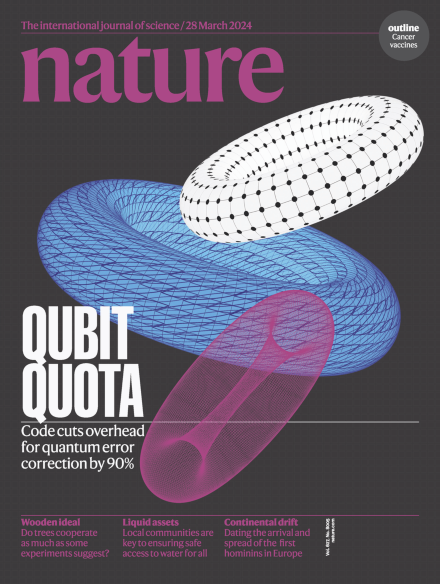
In News in focus, the development of a revolutionary (CAR-T) cancer therapy by a Munbai company at 1/10 the cost of similar products in the US, with several impressive innovations (and a clinical trial over 33 people). The coverage of Michel Talagrand’s 2024 Abel prize, the deteriorating state of scientific research in Russia, a review on how the Big Bang got its name (hint: it was on BBC 3), and remembering India’s Chipko tree-hugging women of Western Himalayas of 50 years ago. The development of signs for scientific terms to add to the Indian and American sign languages.
 There is also an almost sleuthing story on the debates in the ecology community about the theory of “Mother Tree”, introduced by Suzanne Simard, about trees communicating among themselves by underground fungal networks, and thus creating a “wood wide web“. With mature trees favouring their own kin, a theory that critics in the field deem incompatible with evolutionary theory and more crucially missing supporting evidence. (Arguments from Simard that “the European male society hates the mother tree” concept do not help towards a rational denate. The Guardian now has a podcast about this debate.)
 And another story on the (racial and gender) bias of AI image generators. With the conclusion that removing such biases goes through open sourcing. And regulation like the EU’s AI Act. that requires technical documentation on the training datasets. Plus a retrospective on the theory of bird-flight origins, with John Ostrom proposing in 1974 that the evolution to flight was ground-up rather than tree-down.
A cover-paper on IBM error correcting code for quantum computing that only requires each qubit to connect with six others (just like birds in murmuration only keep track of seven neighbours) for an error threshold less than 1%. (With the property that 12 logical qubits can be preserved for 10⁶ cyclces using 288 qubits in total.)


