Archive for evidence

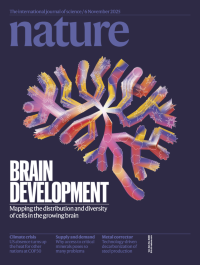
Nature tidbits [06 Nov 2025]

Posted in Books, Kids, pictures, Travel with tags , , , , , , , , , , , , , , , , , , , , , , , , , , , , , , , , , , , , , , , , , , on January 3, 2026 by xi'an

In this issue of Nature (I read on my way to Warwick), a pre-COP30 tribune, to be opposed to later issues!, with a positive take on the impact of the Trump Administration ignoring the conference, with the advances made by China and India (with a surprising 50% of “installed electricity generation capacity coming from non-fossil sources”, if more critical on Brazil’s efforts than the subsequent tribune by the Brazilian undersecretary for ecological transformation for environment, plus a tribune on the ambiguous terms used by countries to secure access to “critical” minerals, in tune with the on-going muscle-flexing attitudes of China and the US. Although the comment is more focussing on the universal access to minerals than to the protection of the workers extracting it and to the environmental impact of it. Followed though by another comment on the climate impact(s) on mining as (no longer) extreme weather events hinder mining all over the (mining) world.

A reflection on China’s 5y plan for science and its reaching a $500 billion annual investment in R&D, predicting (with a large confidence margin) that it will become the #1 power in sciences and technology in the coming decade. I am actually surprised that China has not yet achieved this goal for semi-conductors. And a tribune on the mixed signal of Takaichi Sanae becoming Japan’s first female prime minister, for science as a whole and for gender equity. (My take being that her having UK’s first female prime minister, Margaret Thatcher, as a role-model is not particularly promising. Just like the projection of Marine Le Pen on the verge of becoming France’s first female president does not carry any optimistic message!)

A light entry on a chemical analysis of the specifics of koti luwak (or civet coffee) that does not tell much, beside civet  digestion  adding caprylic and capric acids making beans lower in proteïns and higher in fat. Not yet reaching the goal of “leaving the animals out” from producing this luxury coffee ($75 a cup!).

An article on the shrinking number of US PhD admissions (in some colleges) conflicting with another article in a later issue of a stable influx. And a rather shallow article on the creativity or lack thereof of AI, along with the high sycophancy of LLMs,  to be opposed to a thoughtful reflection on how AI is radically changing the PhD experience and focus, if almost shelving statistics as a thing from the past! But insisting on graduates keeping their ability to check for the validity of their (AI’s)  statistical conclusions!! And another entry on the systematic dismantling of US federal scientific agencies like EPA, CDC, NASA, NOOA, NIH, &tc., by Trump -2.0, which beyond terminating staff contracts in huge proportions is culling the independence of these agencies. With generational impacts on science, training, and evidence-based policies.

A Where I work column featuring a pangolin treated by a Singapore vet, Charlene Yeong. (Unfortunately said pangolin was euthanised after the surgical intervention.) And a book review on the background and motivations of Francis Crick,  just prior to his collaborator James Watson passing away. As noted by the author, Cobb, as MRC staff and later non-resident fellow of the Salk Institute for Biological Studies in San Diego,  “Crick never had to teach or grapple with university administration: he applied for a grant only once in his life.” And concludes that he was not a saint or a hero but “an extraordinarily clever man with limits to his interests and perception”.

Karim Benabed, astrophysician

Posted in Statistics, Travel, University life with tags , , , , , , , , , , , , , , , , , , on December 5, 2025 by xi'an

The astronomer and cosmologist Karim Benabed got killed on Wednesday in Paris. While cycling, run over by a truck-driver (with no further details at the moment). He was a senior research at IAP (Institut d’Astrophysique de Paris) and we actively collaborated together between 2005 and 2010 on an ANR project on efficient simulation methods for inferring cosmological parameters, based on PMC. And Bayesian model comparison. He was a very congenial person, very sharp in assimilating new methods and keen on exploring novel hypotheses. While we did not keep closely in touch, I would meet him now and then while visiting the IAP. Ironically, Darren Wraith, formerly a postdoc with him at IAP,  was visiting me last week and we were reminiscing of that era as late as Saturday night over dinner… So sad (and also so absurd, a truck stopping the trajectory of someone managing to travel to the origins of the Universe). The above is a cartoon of him drawn during his cosmic microwave background presentation during the Nuit de l’Astronomie.

estimating evidence redux

Posted in Books, Statistics, University life with tags , , , , , , , , on November 21, 2025 by xi'an

Following our arXival on the new version of our HPD based Gelfand & Dey estimator of evidence, I got pointed at Wang et al. (2018), which I had forgotten I had read at the time (as testified by an ‘Og entry). Reading my own comments, I concur (with myself¹⁸!) that the method is not massively compelling since it requires a partition set that is strongly related with the targeted integral. The above illustration for a mixture, that is for a pseudo posterior that is a mixture with two Gaussian components with known variance, also shows (in reverse) the curse of dimension and the need for finely tuned partitions. Said partition corresponding to the myriad of sets on the rhs. With such a degree of partitioning, Riemann integration should also produce perfect estimate, as shown by the zero error in the resulting estimator (Table 4).

Nature tidbits [10 July 2025]

Posted in Books, Kids, pictures, University life with tags , , , , , , , , , , , , , , , , , , , , , , , , , on August 27, 2025 by xi'an

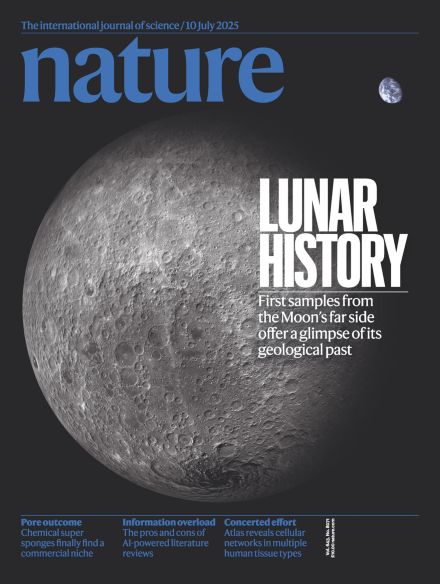
With a beautiful cover and a wealth of papers following China’s mission on the hidden side of the Moon, this issue offers

  • another “feel-good” editorial on the need for a highly ambitious UN treaty on plastics, or rather against plastic, at the August meeting in Geneva this month. Given the opposition of major producers like the USA (now more than ever!) and China, as well as all oil producers, the terrible impact of plastics  on life as a whole (also documented in this issue) is again likely to be ignored in favour of short-term commercial goals. (As illustrated by a feature article on metal-organic frameworks that capture CO² but are posing clear biosafety and environmental challenges, not mention in the article.)
  • a second editorial on the rise of metascience, a term I had not X’ed previously, which appears to be the science of scientific practice and impact. Given the limited impact scientists have on governments and societies, now more than ever!,  it is hard to forecast that metascientists will do better…
  • a rather tone-deaf tribune by the president of the Weizmann Institute on how they are reconstructing the institute after the Iranian attacks of 15 June (following the Israeli attacks of 13 June that hit several universities and assassinated several nuclear scientists). With empty words for “scientists in Gaza” when the very same Israeli government that funds Weizmann has flattened all academic and medical institutions in Gaza. (The asymmetry was later pointed out by a letter to the Nature editor from an Iranian scientist.) Followed a few pages later by the covarege an independent survey on a likely 80,000 death toll in Gaza.
  • A news article on the US National Academy of Sciences, Engineering and Medicine failing to take a stand against Trump 2.0, and too readily engaging into collaboration and censorship. And another one on the growing number of foreign scientists arrested at the border for carrying biological material. While I have (in the long past!) carried a raw milk Camembert in my bag and into the US, mea culpa (Io), I am less sympathetic to these cases since some of the material was hazardous, beyond being undeclared. What has changed in the recent is Homeland Security jumping on these cases to increase their deportation figures…
  • A long comment by Cantabrigians on the ambivalent role of AIs in writing and reviewing papers, with a proposed fix through the Conservative Evidence database, in Cambridge, England. A lot of coulds, woulds, and shoulds, imposing an international involvement, open access, and reliable procedures separating chaff from grain…

on stopping rules

Posted in Books, Statistics with tags , , , , , , , , , , , , , , , , , on August 3, 2025 by xi'an

The workshop in Chennai and its focus on sequential procedures made me realise (among other things) I had never read Cornfield’s 1966 TAS paper on sequential testing and the likelihood principle:

“By sequential analysis I mean any form of analysis in which the conclusion depends not only on the data, but also on the stopping rule.”

Written with little maths and formalism, this paper argues that keeping a fixed critical level amounts to keeping a fixed amount of evidence. Hence constituting an early critique of p-values even though not expressed in such terms. The part of the paper related with the likelihood principle does not address testing or evidence in a Bayesian way. As a side (late awakening) remark, iid observations in sequential settings are not longer independent, conditional on the stopping rule realisation N=n, since they are constrained by the fact that the stopping rule realisation is n and not n-1, n-2, …  For a short while, I thought it was in turn impacting the distribution of any “sufficient” statistic one may propose, with a normalising constant that depends on the unknown parameter and hence cannot be neglected. Over all those years, I had never though of the modification of sufficiency characteristics in such contexts. But in fine the pair made of the value of the stopping rule and of the unsequential sufficient statistics proves enough. And the normalisation constant is the probability that the stopping rule.. stops!, which is equal to one! For the same short while, I was then wondering that the stopping rule principle!

“my second line of argument that there is a reasonable alternative explication of the idea of inference and one which leads to the rejection of sequential analysis. This explication is provided by the likelihood principle—which states that all observations leading to the same likelihood function should lead to the same conclusion.”

I thus went back to the fundamentals (!), namely [freely available] Bernardo’s and Smith’s Section 5.1.4 (reproduced in EJ’s Stopping rule appendix, also citing Cornfield at length), where the likelihood is properly defined by the joint density of the stopping rule τ and the attached sample at their realised values. And failing in the end (and a discussion with Judith)nto spot a missing normalisation constant.