Archive for Jorge Luis Borges

The Wrecker

Posted in Books, Travel with tags , , , , on May 28, 2011 by xi'an

“Full of details of our barbaric manners and unstable morals; full of the need and the lust of money, so that there is scarce a page in which the dollars do not jingle; full of the unrest and movement of our century, so that the reader is hurried from place to place and sea to sea, and the book is less a romance than a panorama.” R.L. Stevenson

Despite a strong appreciation for other books of his’, I was not aware of Robert L. Stevenson’s The Wrecker until Judith Rousseau lent it to me a few months ago. It took me a while to start the novel, maybe because of its kind of kaleidoscopic style with tales within tales within tales…, but past a certain point, I became engrossed in the reading and could not stop till I completed The Wrecker! (Note that the book is freely available for Kindle on amazon!)

“I can never think upon this voyage without a profound sense of pity and mystery; of the ship (once the whim of a rich blackguard) faring with her battered fineries and upon her homely errand, across the plains of ocean, and past the gorgeous scenery of dawn and sunset; and the ship’s company, so strangely assembled…” R.L. Stevenson

The Wrecker is a great travel book, most of the action taking place in the South Pacific seas, with connections in San Francisco, Edinburgh, and even Barbizon. While the main character (and the main point of view) is Dodd Loudon (a Glaswegian name), there are several tales inserted inside his story, especially the resolution of the mystery of the Flying Scud, the boat for which Loudon and his associate Pinkerton go bankrupt, all for nothing. While I enjoy very much the description of the attraction of the southern seas on Dodd, the last two-thirds of The Wrecker on the search for the Flying Scud and then the pursuit of Carthew, the only remaining member of the Flying Scud, are reminding me of Stevenson’s other books, particularly the Scottish ones like Kidnapped (also free!) and Catriona (again free for Kindles), for the exceptionally gripping pace he can impose on the reader. While the book abounds in 19th century style descriptions, they amazingly do not cut this pace but on the opposite contribute to make it more real. I am thus little surprised that Borges loved this book as it is a literary masterpiece, but also because it contributes to the ambiguity between reality and fantasy, and to the endless spiral of alternative realities that Borges liked so much.

morn at the MaM

Posted in Kids, pictures, Running with tags , , , , , , , on October 2, 2010 by xi'an

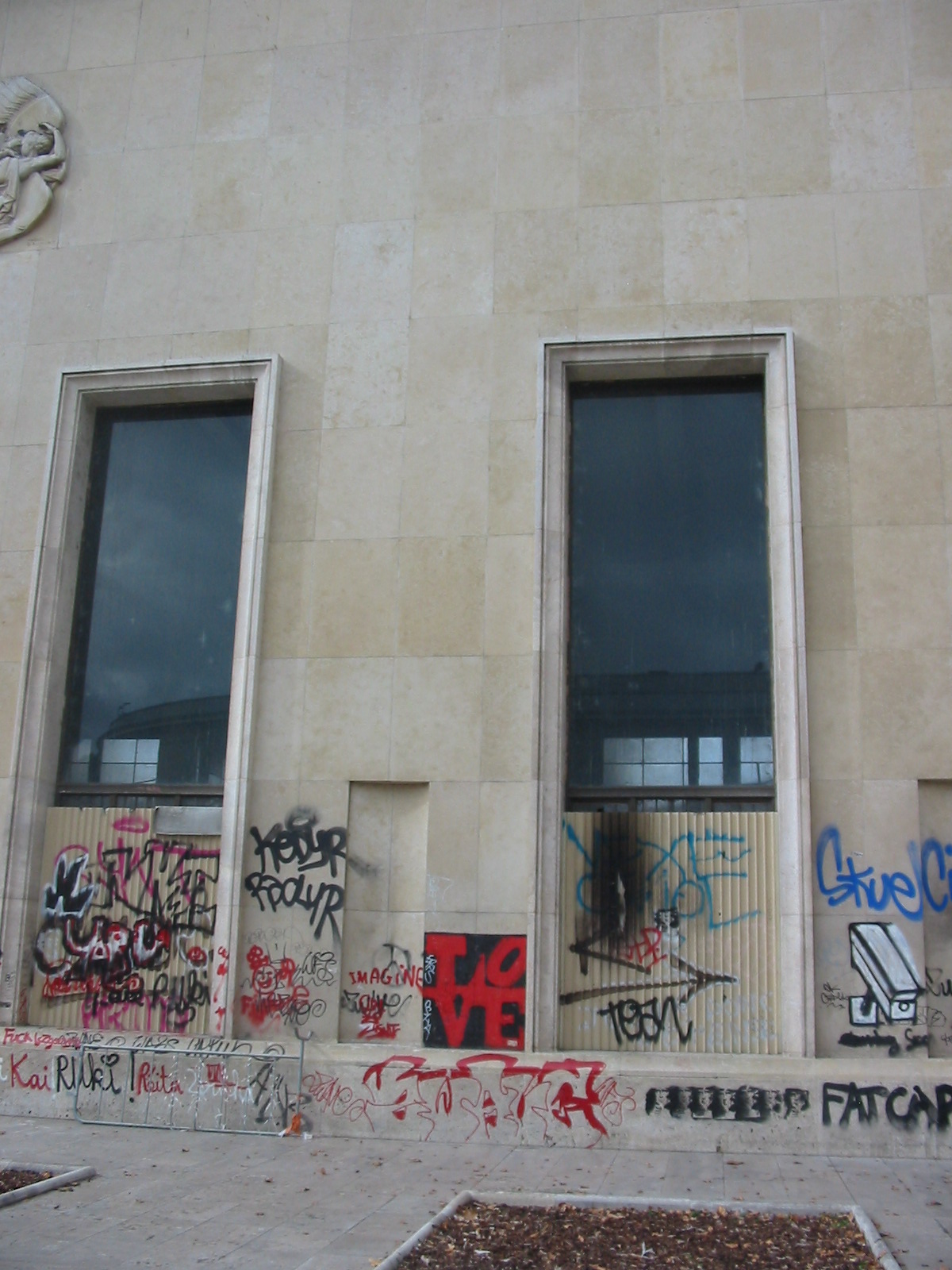
For our “customary” Sunday morning museum trip, my daughter and I visited MaM, the museum of modern art of the City of Paris. (This happened to coincide with the starting point of the road race Paris-Versailles, so the area was full of runners and would-be runners wearing garbage bags to cut off the sharp wind!) The MaM is located within the Palais de Tokyo, which is an impressive building of the 1930’s in a poor state, as shown by the pictures above… No wonder burglars had no trouble getting away with masterpieces earlier this year! The rooms of the museum are however quite decent and include pieces from major 20th century artists like Picasso, Braque, Modigliani, Delaunay, Matisse, Bonnard… There was a special room dedicated to Eugène Leroy, with intricate multilayered compositions (that my daughter simply hated)! Continue reading →

Inception

Posted in Books, Kids with tags , , , , , , , on August 11, 2010 by xi'an

On Sunday night, my son and I walked to a local San Francisco cinema to see Inception. Although I was not particularly eager to see this film, I came out of the theatre with a high opinion of Inception! The story in the movie is deep enough to make the high quality of the visual effects sounds secondary. (The post-modern settings of the deepest dream world are nonetheless striking, with decayed buildings slowly collapsing like icebergs… I also like the experiment when the skies of Paris progressively fold into Hausmanian buildings.)

The idea of dreams within dreams (within dreams within…) and of the possibility of taking control of the dreamer is not novel, Philip K. Dick being the most obvious reference (with references to Gibson’s Neuromancer and Hofstader’s Gödel, Escher, Bach as well). The realisator, Christopher Nolan, mentions the immense writer Jorge Luis Borges as being influential, maybe because one of his books is called Labyrinths, but I fail to see the connection… Nonetheless, the story is well-brought, with enough levels of uncertainty at the beginning to make the unfolding anything but obvious. The role played by Marion Cotillard as Mal, the dead wife of the main character, Dom, is suiting her very well, as an evil madwoman whose madness comes as a major twist in the film. (Although I do not understand why the composer kept Piaf’s song given Cotillard’s previous acting as Piaf…) The counterpoint to Mal is  a Paris student, appropriately called Ariadne, who is played by Ellen Page, the (great) main character of Juno. In this movie, she is less convincing, looking too young for her maturity. Overall, the pace in the movie is gripping, even though it becomes (too) soon clear that the team is going to succeed.

In a Philip K. Dick or a Jorge Luis Borges story, the ending would have been much more ambiguous, even though the very final image made me wonder if this was the real world or yet another dream world in which the main character, Dom, would stay forever… The second part of the movie is somehow too literal and linear, but Inception still is a good sci-fi movie, thus recommended!