Archive for Julian Besag

no thesis no more?!

Posted in Kids, University life with tags , , , on August 5, 2016 by xi'an

thez“The traditional goal is to demonstrate the candidate’s ability to conduct independent research on a novel concept and to communicate the results in an accessible way. Where the academics differ is on how best to achieve that goal.”

Nature had an editorial and more on the changing nature of the PhD thesis and the possible abandonment of the thing. This is an interesting if radical proposal. There are many cases of highly successful research careers that bypassed the PhD station. Take for instance Julian Besag. On the one hand, what matters most for granting a PhD is the ability to produce independent research that is innovative enough. For this purpose, publication in a serious scientific journal is the right filter. (Serious as opposed to predatory.) Asking referees to review a thesis when the chapters have been published and hence refereed sounds like a waste of time. Nature also mentions the issue of the oral defence, which varies a lot across countries and institutions from inexistent to highly formal. If the relevance of the oral defence is to assess the ability of the candidate to present one’s work in an understandable manner, conferences should do. Except that talks are never assessed. If a speaker is poor, he or she may not get invited again by those who attended the talk. May. But this is somewhat secondary in that examples abound of geniuses who were or are unable to deliver good lectures, with no consequence on the quality of their research and collaborations. Collaborations is actually a sensitive aspect, as more and more papers that make the PhD thesis are written jointly. Evaluations of the contribution of the PhD candidate then get delicate, especially when several PhDs are involved. (I used to refrain from co-signing publications with my students during their thesis, but I have loosened this rule in the past years as I find myself more involved in some projects and hence more eager or impatient to see the outcome completed!)

On the other hand, a PhD thesis may help in getting students to focus on broader issues, when compared with published short papers on marginal improvements in quick succession. But this may not be enough of an incentive. The status of the PhD student is also somewhat unique and provides a buffer between studies and research position, where the student gradually morphs into a researcher (or gives up). If we were to abandon the PhD thesis, there would need to be some equivalent structure to give them status and financial support. However, most places accommodate graduate researchers and the ability to support them for variable periods. It would just mean adjusting for longer durations and some degree of protection…

[The above picture is copied from the site theses.fr that compiles theses published in France and produces some basic statistics, which are all wrong in my case!]

Bayes 250th versus Bayes 2.5.0.

Posted in Books, Statistics, Travel, University life with tags , , , , , , , , , , , , , , , , , on July 20, 2013 by xi'an

More than a year ago Michael Sørensen (2013 EMS Chair) and Fabrizzio Ruggeri (then ISBA President) kindly offered me to deliver the memorial lecture on Thomas Bayes at the 2013 European Meeting of Statisticians, which takes place in Budapest today and the following week. I gladly accepted, although with some worries at having to cover a much wider range of the field rather than my own research topic. And then set to work on the slides in the past week, borrowing from my most “historical” lectures on Jeffreys and Keynes, my reply to Spanos, as well as getting a little help from my nonparametric friends (yes, I do have nonparametric friends!). Here is the result, providing a partial (meaning both incomplete and biased) vision of the field.

Since my talk is on Thursday, and because the talk is sponsored by ISBA, hence representing its members, please feel free to comment and suggest changes or additions as I can still incorporate them into the slides… (Warning, I purposefully kept some slides out to preserve the most surprising entry for the talk on Thursday!)

Biometrika, volume 100

Posted in Books, Statistics, University life with tags , , , , , , , , , , , , , , on March 5, 2013 by xi'an

I had been privileged to have a look at a preliminary version of the now-published retrospective written by Mike Titterington on the 100 first issues of Biometrika (more exactly, “from volume 28 onwards“, as the title state). Mike was the dedicated editor of Biometrika for many years and edited a nice book for the 100th anniversary of the journal. He started from the 100th most highly cited papers within the journal to build a coherent chronological coverage. From a Bayesian perspective, this retrospective starts with Maurice Kendall trying to reconcile frequentists and non-frequentists in 1949, while having a hard time with fiducial statistics. Then Dennis Lindley makes it to the top 100 in 1957 with the Lindley-Jeffreys paradox. From 1958 till 1961, Darroch is quoted several times for his (fine) formalisation of the capture-recapture experiments we were to study much later (Biometrika, 1992) with Ed George… In the 1960’s, Bayesian papers became more visible, including Don Fraser (1961) and Arthur Dempster’ Demspter-Shafer theory of evidence, as well as George Box and co-authors (1965, 1968) and Arnold Zellner (1964). Keith Hastings’ 1970 paper stands as the fifth most highly cited paper, even though it was ignored for almost two decades. The number of Bayesian papers kept increasing. including Binder’s (1978) cluster estimation, Efron and Morris’ (1972) James-Stein estimators, and Efron and Thisted’s (1978) terrific evaluation of Shakespeare’s vocabulary. From then, the number of Bayesian papers gets too large to cover in its entirety. The 1980’s saw papers by Julian Besag (1977, 1989, 1989 with Peter Clifford, which was yet another precursor MCMC) and Luke Tierney’s work (1989) on Laplace approximation. Carter and Kohn’s (1994) MCMC algorithm on state space models made it to the top 40, while Peter Green’s (1995) reversible jump algorithm came close to Hastings’ (1970) record, being the 8th most highly cited paper. Since the more recent papers do not make it to the top 100 list, Mike Titterington’s coverage gets more exhaustive as the years draw near, with an almost complete coverage for the final years. Overall, a fascinating journey through the years and the reasons why Biometrika is such a great journal and constantly so.

When Buffon meets Bertrand

Posted in R, Statistics, Travel with tags , , , , , on April 7, 2011 by xi'an

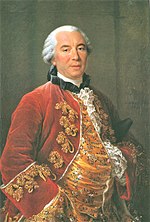
When Peter Diggle gave his “short history” of spatial statistics this morning (I typed this in the taxi from Charles de Gaulle airport, after waiting one hour for my bag!), he started with a nice slide about Buffon’s needle (and Buffon’s portrait), since Julian Besag was often prone to give this problem as a final exam to Durham students (one of whom is responsible for the candidate’s formula). This started me thinking about how this was open to a Bertrand’s paradox of its own. Indeed, randomness for the needle throw can be represented in many ways:

  • needle centre uniformly distributed over the room (or the perpendicular to the boards) with a random orientation (with a provision to have the needle fit);
  • needle endpoint uniformly distributed over the room (again a uniform over the perpendicular is enough) with a random orientation (again with a constraint);
  • random orientation from one corner of the room and a uniform location of the centre on the resulting line (with constraints on both ends for the needle to fit);
  • random orientation from one corner of the room and a uniform location of one endpoint on the resulting line, plus a Bernoulli generation to decide on the orientation (with constraints on both ends for the needle to fit);
  • &tc.

I did not have time to implement those different generation mechanisms in R, but have little doubt they should lead to different probabilities of intersection between the needle and one of the board separations. I actually found a web-page at the University of Alabama Huntsville addressing this problem through exercises (plus 20,000 related entries! Including von Mises‘ Probability, Statistics and Truth itself. A book I should read one of those days, following Andrew.). Note that each version corresponds to a physical mechanism. Thus that there is no way to distinguish between them. Had I time, I would also like to consider the limiting case when the room gets infinite as, presumably, some of those proposals would end up being identical.

Julian Besag memorial

Posted in Statistics, Travel, University life with tags , , , , , , on April 3, 2011 by xi'an

Homme libre, toujours tu chériras la mer!
La mer est ton miroir; tu contemples ton âme
Dans le déroulement infini de sa lame,
Et ton esprit n’est pas un gouffre moins amer.
Charles Baudelaire, Les Fleurs du Mal

The first afternoon of the memorial session for Julian Besag in Bristol was an intense and at times emotional moment, where friends and colleagues of Julian shared memories and stories. This collection of tributes showed how much of a larger-than-life character he was, from his long-termed and wide-ranged impact on statistics to his very high expectations, both for himself and for others, leading to a total and uncompromising research ethics, to his passion for [extreme] sports and outdoors. (The stories during and after diner were of a more personal nature, but at least as much enjoyable!) The talks on the second day showed how much and how deeply Julian had contributed to spatial statistics and agricultural experiments, to pseudo-likelihood, to Markov random fields and image analysis, and to MCMC methodology and practice. I hope I did not botch too much my presentation on the history of MCMC, while I found reading through the 1974, 1986 and 1993 Read Papers and their discussions an immensely rewarding experiment (I wish I had done prior to completing our Statistical Science paper, but it was bound to be incomplete by nature!). Some interesting links made by the audience were the prior publication of proofs of the Hammersley-Clifford theorem in 1973 (by Grimmet, Preston, and Steward, respectively), as well as the proposal of a Gibbs sampler by Brian Ripley as early as 1977 (even though Hastings did use Gibbs steps in one of his examples). Christophe Andrieu also pointed out to me a very early Monte Carlo review by John Halton in the 1970 SIAM Rewiew, review that I will read (and commment) as soon as possible. Overall, I am quite glad I could take part in this memorial and I am grateful to both Peters for organising it as a fitting tribute to Julian.