Archive for Scotland
International Mountain Day [celebrate & protect!]
Posted in Mountains, Running, Travel with tags alpine climbing, Glen Nevis, Highlands, international days, International Mountain Day, Mamores, munroes, Ring of Steall, Scotland, sunny day, the mountains are calling on December 11, 2024 by xi'an
banKrUpt, franc’route
Posted in Kids, pictures, Travel, University life with tags bankruptcy, Brexit, college ranking, Coventry, COVID-19, foreign students, French government, French politics, inflation, Labour, Le Monde, Nature, PhD course, Russian invasion, Scotland, Shanghai ranking, student fees, tuition fees, UK Government, UK politics, UK universities, Université Paris Dauphine, University of Coventry, University of Warwick on November 14, 2024 by xi'anRead in both Le Monde (Sept) and Nature (26 Sept) concerning articles about the poor financial state of many higher education institutions in the UK, if not the most prestigious ones… (Warwick being so far preserved from that issue, if not the neighbouring University of Coventry.) Up to 80% of French universities—prestigious and less prestigious alike—are also facing repeated deficits, for several years in a row, if mostly for different reasons besides the after-effects of COVID and the economical crisis amplified by the Russian invasion.
 The main difference (between France and Britain—minus bonnie Scotland!) is in the UK government not providing direct support to higher education institutions, treating them as businesses that must make a profit on average to survive. To add insult to injury, the short-sighted Sunak Government has strongly reduced the number of foreign students (that they considered immigrants) when those are a key component of the universities business models since they pay much higher fees compared with the capped fees for UK nationals. Surprisingly (to me), the new Labour government does not intend to change either policy. The more surprising (to me) when the first institutions to fail will be (are?) those concentrating students from less privileged backgrounds. Quite paradoxical for a party with social ideals and socialist roots. Besides, repeated reductions of the attractivity of Britain for higher education may reach a no-return point in terms of its (World first-tier) scientific productivity.
 France is financing its universities for 60% of their budget, while tuition fees in national universities (that do no include Paris Dauphine) are nominal for EU students (and special cases like PhD programs). Progressive cuts have led to tighter budgets, more deficit, with limited alternative sources of financing, since raising students fees is completely taboo. Added to academic positions being little attractive (for offering comparatively low salaries), this abides poorly for France keeping being part of top higher education countries. (It already figures very rarely in the country comparisons produced by Nature on an almost weekly basis.) The new higher education minister is known for pushing towards more “autonomy” (read less financing) of universities and the current State deficit may prove the tipping point for cutting further State support for public higher education institutions at large and fundamental research.

Nature snapshots
Posted in Books, Mountains, pictures, Travel with tags Andrei Kolmogorov, antibiotics, ban whaling, COVID-19, French universities, Greenland, Harold Jeffreys, Iceland, International Whaling Commission, IWC, Japan, Montréal Protocol, moratorium, Nature, Neolithic, NIH, Norway, Orkney Islands, plate tectonics, postdoctoral position, pyramids, Scotland, Stonehenge, transhumanism, US academia, whaling on September 15, 2024 by xi'an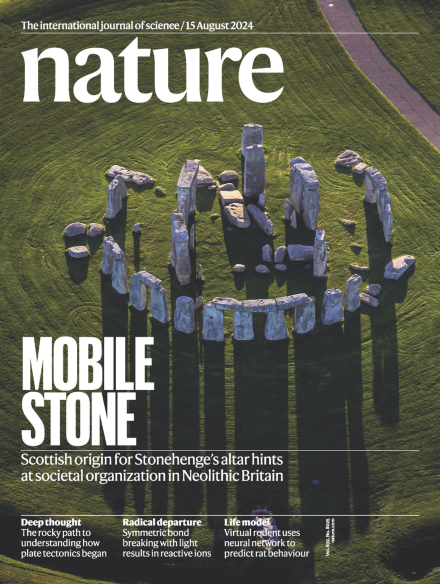
- the incredible discovery that the massive slabs of Stonehenge were transported from Scotland, 800km North. Reuniting with the Round Table legend that Merlin brought them from Ireland. (Through a Kolmogorov-Smirnov test (!) not rejecting the null that the age distributions of the altar stones and those of the Orcadian Bassin are identical. And kernel density estimates.) With their transportation 4,500 years ago remaining a mystery but like carried out by sea from Northern Scotland or even the Orkney Islands.
- a debate on whether or not to cap US postdoctoral positions to five years, as considered by the NIH. The intention is to prevent lengthy short-term positions in academia and to force institutions to hire into more permanent jobs. However, if the only proactive step from the NIH is this cap, institutions can proceed by rotating within the perpetually renewed pool of fresh PhD laureates. Leaving the older postdocs no other choice than switching to non-academic jobs when they cannot secure a tenure-track position. (In France, after 6 years on short-term contracts, a scientist’s most recent employer is legally obligated to offer stable employment, which leads to the preventive decision by labs of not hiring postdocs beyond 5 years.)
- a more precise history of plate tectonics, which our own Jeffreys opposed all his life.
- the several attempts at overcoming the antibiotic diminishing return in fighting microbial infections. That include generative AI.
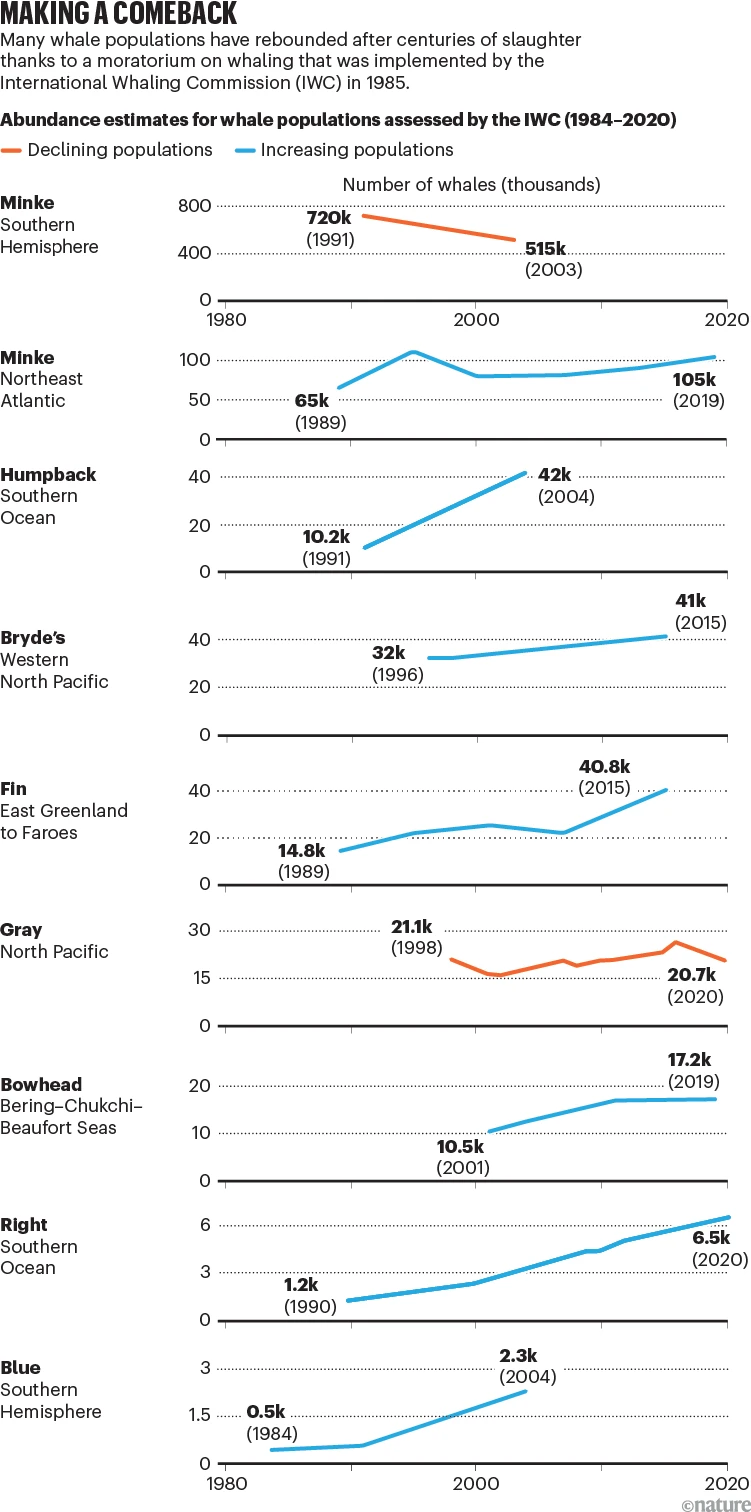
- a shocking call to close the International Whaling Convention (formerly chaired by one of the authors) and let countries run their whaling, at a time when Japan launched a massive commercial whaling ship and when Peter Watson has been jailed in Greenland! With terrible three point graph “demonstrating” a comeback for most whale species.
- a novel theory behind the construction of Saqqara pyramids, involving hydraulics as put forward by a Paris institute called Paleotechnic (!)
- and a scathing book review of Kurzweil’s The Singularity is Nearer (when we merge with AI) [!], which concludes with ” Kurzweil’s understanding of humanity and nature is so bizarrely deficient that his augury is more of a curse than a blessing. His spiritual quest is devoid of spirit. The singularity betrays what is singularly human.” With the reviewer hoping “that we would have reached bullshit escape velocity by” the 2030 horizon predicted by Kurzwel for transhumanist heaven.
Mark [a]B[c], plus cats
Posted in Books, Kids, pictures, Statistics, University life with tags ABC, ABC variable selection, Bayesian neural networks, HDR, HPD region, Mark Beaumont, model misspecification, normalizing flow, One World ABC Seminar, philogenic trees, principal components, prior predictive, Saving Wildcats, Scotland, summary statistics, The Guardian, University of Bristol, University of Warwick, webinar, wildcats on June 22, 2024 by xi'an 30 May was a day of first and last times, if not in capital ways (for me), on the One World ABC webinar. This was the first time we had a talk by Mark Beaumont and also the first time I had team experience of facing a smoking participant, while this was the last time of our monthly webinar for the (Northern) academic year.
The talk was about model misspecification in population genomic, from an ABC perspective with the motivation of common noticeable difference between the distributions of d(s,s⁰) and d(s,s’), distances between the prior predictively simulated summary statistics and the observed ones vs posterior generated ones, which should indicates misspecification, esp with complicated models. Mark and his coauthors then supported a gradual elimination of summary statistics to diminish the discrepancy, hence voluntarily impoverishing the model. While blaming the statistics sounded a bit like shooting the messenger, the resolution is of obvious interest if backing from modelling the misspecification itself.
Some of the presented work was conducted in Ward et al (2022, NeurIPS) with a reference to the outlying Ratmann et al (2009) we later discussed, for including tolerance as an extra parameter ε, thereby reconsidering Wikinson’s exact ABC for noisy observations y by the medium of a normalising flow on the marginal distribution of the denoised x (learned from the prior predictive)
More precisely, the idea is to drop summary statistics by checking whether or not the observed S⁰ belongs to HPD region, removing one component of S at a time, using e.g. a k-NN estimate for the summary density (hence depending on parameterisation of said statistics for the distance). Hopefully, the process stops before loosing identifiability by using too few statistics. I also wondered at multiple uses of the data in this sequential procedure but Mark argued for adopting a meta- or pragma- or Gelmanian- Bayesian perspective in the end!
Another perk was the appearance of (and illustration with) the Scottish Wildcat, mentioned in The Guardian a few months ago and discussed in the ‘Og, with further papers exploring more aspects of this hybridization, like a posterior applied to a much more complex phylogenic tree reconstruction for cats of different creeds and many related parameters.
Rosslyn chapel [jatp]
Posted in pictures, Running, Travel with tags Da Vinci Code, Dan Brown, Edinburgh, Midlothian, Pentland Hills, road running, Roslin, Rosslyn Chapel, Scotland, SMC 2024 on June 7, 2024 by xi'an