
Archive for USA
back to the Dark Ages
Posted in Kids, pictures, Travel with tags anti-scientism, antivaxers, Florida, measles, Newspeak, populism, rationalism, slavery, The Guardian, Trump administration, US politics, USA, vaccination, vaccines on September 10, 2025 by xi'an
Nature tidbits [10 July 2025]
Posted in Books, Kids, pictures, University life with tags @ScientistTrump, camembert, Cantabrigians, Chang'e 6 Mission, defence spending, Department of Homeland Security, Europe, evidence, Gaza, Geneva, Io, Iran, metal-organic frameworks, metascience, missiles, moon mission, National Academy of Sciences, Nature, nuclear disarmament, nuclear energy, plastic waste, raw milk, Science, USA, USAid, Weizmann Institute on August 27, 2025 by xi'an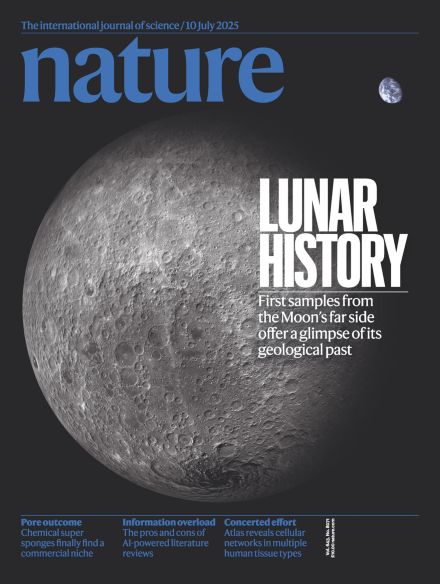
- another “feel-good” editorial on the need for a highly ambitious UN treaty on plastics, or rather against plastic, at the August meeting in Geneva this month. Given the opposition of major producers like the USA (now more than ever!) and China, as well as all oil producers, the terrible impact of plastics on life as a whole (also documented in this issue) is again likely to be ignored in favour of short-term commercial goals. (As illustrated by a feature article on metal-organic frameworks that capture CO² but are posing clear biosafety and environmental challenges, not mention in the article.)
- a second editorial on the rise of metascience, a term I had not X’ed previously, which appears to be the science of scientific practice and impact. Given the limited impact scientists have on governments and societies, now more than ever!, it is hard to forecast that metascientists will do better…
- a rather tone-deaf tribune by the president of the Weizmann Institute on how they are reconstructing the institute after the Iranian attacks of 15 June (following the Israeli attacks of 13 June that hit several universities and assassinated several nuclear scientists). With empty words for “scientists in Gaza” when the very same Israeli government that funds Weizmann has flattened all academic and medical institutions in Gaza. (The asymmetry was later pointed out by a letter to the Nature editor from an Iranian scientist.) Followed a few pages later by the covarege an independent survey on a likely 80,000 death toll in Gaza.
- A news article on the US National Academy of Sciences, Engineering and Medicine failing to take a stand against Trump 2.0, and too readily engaging into collaboration and censorship. And another one on the growing number of foreign scientists arrested at the border for carrying biological material. While I have (in the long past!) carried a raw milk Camembert in my bag and into the US, mea culpa (Io), I am less sympathetic to these cases since some of the material was hazardous, beyond being undeclared. What has changed in the recent is Homeland Security jumping on these cases to increase their deportation figures…
- A long comment by Cantabrigians on the ambivalent role of AIs in writing and reviewing papers, with a proposed fix through the Conservative Evidence database, in Cambridge, England. A lot of coulds, woulds, and shoulds, imposing an international involvement, open access, and reliable procedures separating chaff from grain…
Nature tidbits [19 June 2025]
Posted in Books, Kids, pictures, Travel, University life with tags @ScientistTrump, AMOC), Arctic, Atacama, Atlantic Meridional Overturning Circulation, axolotls, ban guns, Chile, China, computer vision, cyborg, defence spending, DOGE, Egypt, Elsevier, Europe, face recognition, First Nations, foreign aid, fossils, France, Greenland, gun control, gun lobby, ice age, infectious diseases, life expectancy, Medicaid, Nature, pangolin, Paris, plastic waste, Pontifical Academy of Science, Science, Svalbard, Thousand Talents Plan, transport accidents, University of Warwick, USA, USAid, Vera Rubin Observatory, WHO, World Health Organization on August 9, 2025 by xi'an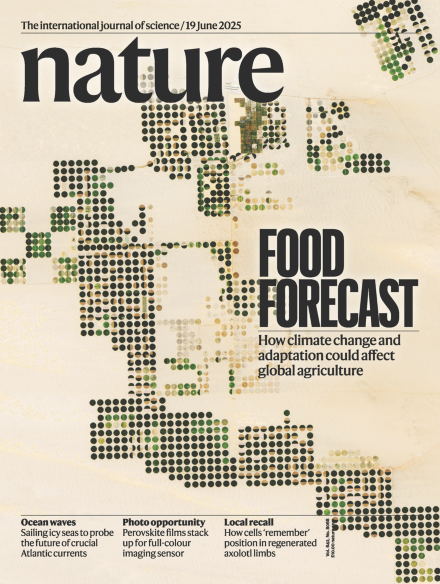
News on the incoming Vera Rubin Observatory telescope in Chile—if not close to the Atacama peaks I climbed during ISBA 2004—and its unique technology (with a camera the size of a car!). As well as a highlight on African space agencies (where I discovered that Egypt is the most active). Plus, a rather vague report on ether0 as a “stepping stone towards a reasoning model“, once again playing with words and double meaning on what’s reason(ing). Further entries (alas!) onH ow Trump 2.0 is reshaping science with the impact of barring entry to 19 countries’ nationals and China multiplying calls to attract researchers from abroad and keep students in the country. Including unusually large salaries and benefits. (Pangolins and axolotls make an appearance in both this issue and the next, how unlikely is this?! With the conflicting items of information that the former are primarily hunted for their scales or for their taste.)
 The most frightening section of the 19 June issue is however on the threat of a collapse of the Atlantic Meridional Overturning Circulation (AMOC), which would bring a new Ice Age to Western Europe and dramatic changes in the weather worldwide. Along with several research articles on climate change and its impacts.
meanwhile, today, in Nashville
Posted in Books, pictures, Statistics, Travel, University life with tags #ERCSyG, American Statistical Association, Bayesian privacy, differential privacy, ERCIM, John Tukey, JSM 2025, Nashville, Ocean, privacy, Pufferfish flavor, Tennessee, Trump administration, U.S. Customs and Border Protection, USA on August 5, 2025 by xi'an
[Josh and I organised this privacy session a while ago, before Josh returned to Adelaïde, and we found neither of us could/would attend JSM!]
Data Privacy: Frontiers and Barriers of Differential Privacy
Monday, Aug 4: 2:00 PM – 3:50 PM
Main Sponsor
Committee on Privacy and Confidentiality
Presentations
Enhancing Feature-Specific Data Protection via Bayesian Coordinate Differential Privacy
Local Differential Privacy (LDP) offers strong privacy guarantees without requiring users to trust external parties. However, LDP applies uniform protection to all data features, including less sensitive ones, which degrades performance of downstream tasks. To overcome this limitation, we propose a Bayesian framework, Bayesian Coordinate Differential Privacy (BCDP), that enables feature-specific privacy quantification. This more nuanced approach complements LDP by adjusting privacy protection according to the sensitivity of each feature, enabling improved performance of downstream tasks without compromising privacy. We characterize the properties of BCDP and articulate its connections with standard non-Bayesian privacy frameworks. We further apply our BCDP framework to the problems of private mean estimation and ordinary least-squares regression. The BCDP-based approach obtains improved accuracy compared to a purely LDP-based approach, without compromising on privacy.
Speaker: Alireza Fallah, UC Berkeley
Composition of privacy mechanisms: Only fresh noise counts
Composition is a key desiderata for a differential privacy (DP) flavor because it ensures a controlled degradation of the total privacy loss as additional statistics are released. However, ever since Pufferfish DP flavors were first introduced in 2012 it has remained an open problem whether these flavors – which take a Bayesian viewpoint by incorporating into DP the attacker’s uncertainty in the confidential data – satisfy composition. In this work, we resolve this question by proving that a Pufferfish flavor satisfies composition if and only if it is equivalent to a pure ε-DP flavor. Therefore, the generalization of DP to Pufferfish privacy is incompatible with the desiderata of composition. Furthermore, we determine that a Pufferfish mechanism composes with itself if and only if it satisfies pure ε-DP – i.e. if and only if it does not make use of the attacker’s uncertainty in the data generation mechanism. This result establishes that any class of composable mechanisms which satisfy Pufferfish – such as those found in existing literature – in fact satisfy the stronger condition of pure ε-DP. In intuitive terms, we show that a composable mechanism cannot reuse the “noise” provided by the attacker’s Bayesian model of the confidential data: only fresh noise counts when it comes to composition.
Speaker: James Bailie, Harvard University
Tukey Depth Mechanisms for Practical Private Mean Estimation
Mean estimation is a fundamental task in statistics and a focus within differentially private statistical estimation. While univariate methods based on the Gaussian mechanism are widely used in practice, more advanced techniques such as the exponential mechanism over quantiles offer robustness in the strong contamination model and improved performance, especially for small sample sizes. Tukey depth mechanisms carry these advantages to multivariate data, providing similar strong theoretical guarantees. However, practical implementations fall behind these theoretical developments.
In this talk, I will discuss first steps to bridge this gap by implementing the (Restricted) Tukey Depth Mechanism, a theoretically optimal mean estimator for multivariate Gaussian distributions, yielding improved practical methods for private mean estimation. The implementations enable the use of these mechanisms for small sample sizes or low-dimensional data. Additionally, I will present variants of these mechanisms that use approximate versions of Tukey depth, trading off accuracy for faster computation. We demonstrate their efficiency in practice, showing that they are viable options for modest dimensions. Given their strong accuracy and robustness guarantees, we contend that they are competitive approaches for mean estimation in this regime. Finally, I will discuss future directions for improving the computational efficiency of these algorithms by leveraging fast polytope volume approximation techniques, paving the way for more accurate private mean estimation in higher dimensions, as well as conjectured barriers toward this goal.
In this talk, I will discuss first steps to bridge this gap by implementing the (Restricted) Tukey Depth Mechanism, a theoretically optimal mean estimator for multivariate Gaussian distributions, yielding improved practical methods for private mean estimation. The implementations enable the use of these mechanisms for small sample sizes or low-dimensional data. Additionally, I will present variants of these mechanisms that use approximate versions of Tukey depth, trading off accuracy for faster computation. We demonstrate their efficiency in practice, showing that they are viable options for modest dimensions. Given their strong accuracy and robustness guarantees, we contend that they are competitive approaches for mean estimation in this regime. Finally, I will discuss future directions for improving the computational efficiency of these algorithms by leveraging fast polytope volume approximation techniques, paving the way for more accurate private mean estimation in higher dimensions, as well as conjectured barriers toward this goal.
This talk is based on joint work with Gavin Brown.
Speaker: Lydia Zakynthinou, UC Berkeley
Nature tidbits [26 June 2025]
Posted in Books, Kids, Travel, University life with tags @ScientistTrump, axolotls, ban guns, computer vision, cyborg, defence spending, DOGE, Europe, face recognition, First Nations, foreign aid, fossils, France, gun control, gun lobby, infectious diseases, life expectancy, Medicaid, Nature, Paris, plastic waste, Pontifical Academy of Science, Science, transport accidents, University of Warwick, USA, USAid, WHO, World Health Organization on August 1, 2025 by xi'an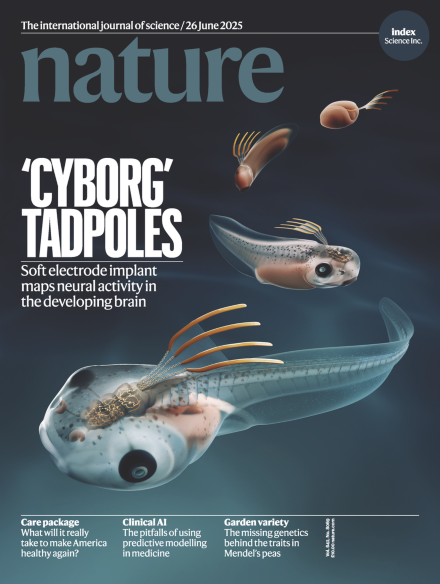
Half-a-dozen entries on How Trump 2.0 is reshaping science, from the federal judicial ruling that NIH grants are illegal since discriminatory (with no immediate impact), to the new vaccine panel members set by RF Kennedy with a dearth of experts and the arrival of vaccine sceptics (or worse), to a Nature supplement entitle Science Inc., looking at private funding to compensate for federal disengagement (with France’s Sanofi and Capgemini deserving a mention, for once), to an original Nature—and KFF, a non-profit health-policy research organization from San Francisco— investigation on how to make the US healthy again. If at all feasible.

As expected, the gap with other wealthy (and more healthy) nations is stupendous for many criteria. Caused by much higher death rates associated with COVID-19, substance misuse, chronic diseases, transport accidents (poor public facilities), and gun deaths (of course, even though this latter cause was recently removed from the HSS website). With a significant difference between States and ethnicities. The fixes requiring more federal intervention and money, as well as opposing the gun lobby, it is very very unlikely this is going to happen, witness the recent cut on Medicaid.
“one 5-year-old out of every 20 will die before the age of 45 The comparable figure is one in 50 in the United Kingdom and one in 100 in Switzerland.”


