Archive for WW II

a journal of the chaos, conquest, guerre, famine, and death year

Posted in Books, Kids, Mountains, pictures, Running, Travel, Wines with tags , , , , , , , , , , , , , , , , , , , , , , , on November 9, 2024 by xi'an

Read Guerre (War) by Louis-Ferdinand Céline (with a cover by Tardi, as for the other books of his in the Folio collection), a recent recovery of a 1934 manuscript that had been stolen from his Paris apartment in 1944 when he fled to Sigamaringen along with the collaborationist Pétain government. As described (with much whining and cynicism) in D’un château l’Autre (Castle to Castle). If Voyage au Bout de la Nuit is to be considered as one of the strongest anti-war novels ever, Guerre sounds like the original, uncensored , unedited—a few words and the earlier pages are missing—, version of this book, despite being written later. A short but intense 150 pages raw fall into the mindset of a surviving WWI soldier that feels like treading a sewer but offers an in-your-face testimony on the unlimited amorality of war and men, with no heroes… As mentioned earlier, I also read Han Kang’s The Vegetarian, which is another kind of shell-shocking journey in three mindsets around the central figure of the sister fasting herself to death, whose perspective is barely heard. Raw, again, with introspection and returns to childhood trauma, impressive in many respects and so original!

Made jars and jars of green tomato jam as the tomato plants had started to rot due to the enormous volume of rain we got in September and October. Also made a pie with chestnuts and chocolate and the very last raspberries, after my attempt at chestnut butter did not prove successful. With a sprinkle of matcha to substitute for sugar. (Figs are also almost done for the season, after a massive harvest that I mostly shared with my Dauphine colleagues.)

refugees, 80 years ago

Posted in Books, Kids, pictures with tags , , , , , , , , , , , on August 10, 2024 by xi'an

the amazing adventures of Kavalier & Clay [book review]

Posted in Books, Kids, Travel with tags , , , , , , , , , , , , , , , , , , , , , , , , , , , , , , , , , , , on August 2, 2024 by xi'an

After reading the (pretty good) Yiddish Policemen’s Union by Michael Chabon, I found out this earlier book had won a Pullitzer prize for fiction and decided to give it a go. Which lasted for weeks as I found the book very slow paced, to the point of always falling asleep within a few pages. The pace sort of accelerated in the second half, sort of coïnciding with Pearl Harbour and the formal entry of the United States of America into the war. At the beginning it felt too much like a transposition of my former read and despite the multiple covariates with a positive coefficient (comics, Prague, the golem, Rosa Luxemburg, New York City, the silliness of the superhero concept, esp. when repeated week after week, the ambivalence of the very notion as well, when considering the closeness between Supermen and Hitler’s Übermensch), I had a hard time engaging with the story. Maybe due to the lengthy sentences and descriptions which, as I read later in a review, were intended to supplement the absence of visual representations that (obviously) come with a graphical novel. Maybe due to the millefeuille of literary styles and fields and of parallel stories with a myriad of characters and places.

“Besotted with language and brimming with pop culture, political relevance and bravura storytelling…” The New York Times

I clearly am a minority in enjoying the book so little. The Guardian put it within its 100 best books of the 21st Century. If in the second half.  And so did the New York Times. In its 16th position. There is even a (inactive) website on the book! Actually, the massive injection within the actual history of America and Europa at these most tragic times makes the novel an epic, helped with a witty and mostly understated humour. There are indeed lots of actual facts and characters, the book deeply digs into the history of the time. While indirect snapshots of the unrolling Holocaust are ghastly,  Both the sinking of the orphan boat (presumably inspired by the all too real attack on the City of Benares) and the Antarctica part during WW II are sheer fiction (despite a long-going myth of Nazi bases there). But a compelling part of the novel, paradoxically.

Nature snapshots

Posted in Books, Kids, pictures, Statistics, University life with tags , , , , , , , , , , , , , , , , on July 13, 2024 by xi'an

As I was waiting for my wife when visiting the Doges’ Palace in Venice last week, I read most of one of the issues of Nature I had brought with me to the Serenissima (after they arrived by bulk the week before for unclear reasons).

  • One of the editorials is about AI-assisted design of mathematical conjectures. Reminding me of grant panels I took part in where candidates in pure maths were often focussing on solving one or many conjectures, as opposed to more applied branches (like statistics).
  • Two entries about France, one about Macron’s idea of a European DARPA, unlikely to convince European partners after his calling most unnecessarily an election and bringing the extreme-right to its apex since the Vichy régime. Another one about the super mega campus Paris-Saclay unable to settle on a form of leadership and hence elect a president. Federalist versus centralised… Once again, thanks to Macron’s reckless gamble, his current Ministry for Higher Education may be in need of a position next month and could return to heading the campus.
  • Worrying coverage of bird flu in US cows (not yet pigs on the wing but worrying enough) and of zombie cells that should have died and that new treatments can fight way better.
  • A reflection on coming up with a treaty against AI weapons with autonomous kill decisions but isn’t it too late?!
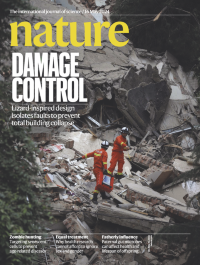
  • Building design that would avoid total collapse of a failing building, as in South Florida four years ago. But solely for new ones, unfortunately.  (And the connection with lizards escapes me, except for managing to escape by loosing a tail…)
  • A biography of Daniel Kahneman, decision-theorist, 2002 Nobel economics (aka Bank of Sweden) Prize, author of Thinking, Slow and Fast, and spending the WW II in occupied France hiding from round-ups by the Vichy police.

anyone can turn into a refugee

Posted in Books, Kids, pictures, Running, Travel with tags , , , , , , , , , on June 23, 2024 by xi'an

When I visited my mother last month for the Pegasus half-marathon, celebrations of the 80th anniversary of the D Day landing were starting in Normandy. And she talked with us of the days around the event, when as a 5y old she had to flee (under German occupation troops’orders) her family house in Saint-Lô, that had been hit by Allied shells and stay with other refugees in the nearby countryside, for several weeks, eating meat from cows killed during the combats and the few products the local farm was able to provide. When the Allied troops managed to push further inland, they returned to the house, which had been mostly looted, and decided to move to my grandfather’s birthplace, 50km away, by foot and with a wheelbarrow to carry the 5y and 4y old girls. They arrived to find that my great-grand-mother’s house had also been destroyed, by a bomb this time, but that she was alive and leaving with relative in the countryside, which is where they spent the remaining months of 1944, before settling for 35y in another small western Normandy town… During this conversation, she repeatedly mentioned how strongly she was relating with the victims of the current refugee crises, both in Ukraine and Gaza, in that she knew from experience how quickly and irremediably one could become a refugee thrown on the dangerous roads of a war zone, with hardly any remaining belongings…