Archive for the Kids Category

bothsidesism in Nature

Posted in Books, Kids, Running with tags , , , , , , , , , , on July 24, 2026 by xi'an

In its 21 May issue, Nature prints two columns back to back, “Can the ‘steroid Olympics’ show the sporting community how to support athletes better?” by April Henning and “The Enhanced Games miss the point: science can clean up sport“, by Kim Wolff. They are both about the so-called “Enhanced Games” that were to take place a few days later, on 24 May, in Las Vegas (where else?!), with competitions in swimming, athletics, and weightlifting, and no drug test. With only one World record unofficially broken at the event. (Fortunately no one died. So far.)

The first column argues that those games are exposing how many elite athletes are struggling with financial, physical and psychological issues. And how the current anti-doping system, built around the agency WADA (whose French branch is located in the town next to mine) is getting it wrong… The second one is warning about the impact of this deregulation on athletes’ welfare and integrity. Especially when the impact of most drugs on health is unknown, esp. in the long run (!). The author is thus calling for improved anti-doping protocols, rather than a return to the 1980’s GDR State-sanctioned doping. I find it terrible that Nature brings those two opposite points with no balancing towards the reasonable one, while no scientific argument in favour of live testing came out of the first column. Terrible.

a journal of the Hugo year (ter)

Posted in Books, Kids, Mountains, pictures, Running, Travel, University life, Wines with tags , , , , , , , , , , , , , , , , , , , , , , , , on July 21, 2026 by xi'an

Read part of another Hugo best novel contender, Death of the Author by Nnedi Okorafor, which is about a writer getting suddenly famous for an original novel of (voluntarily) rusty robots, but this was too much of an infinite mirror (and too little speculative fiction) that I gave up a third of the way, before anything speculative happened…. And the Hugo (hopeful) novella The Summer War by Naomi Novik, nice tale à la Grimm if not particularly deep. And another Hugo nominated novel The Incandescent by Emily Tesh, a magical boarding school à la Harry Potter, enjoyable enough if missing in villeins besides demons! However, the constant whine of the head teacher about her duties, the glorification of the English boarding school model, and the fixation on the A levels and on getting to Oxford are weighting down my vote… And the Hugo novelette The Girl That My Mother Is Leaving Me For by Cameron Reed, with little appeal. Lots of books, thanks to this long-lasting spell of jetlag!

Cooked cold soba noodles for the week in Nagoya, And (alas!) enjoyed eels in the local histumabashi format. Alas because I discovered afterwards that eels are dramatically threatened to extinction. Given that the fisheries rely on wild eels for the most part.

Watched the whole season of A Knight of the Seven Kingdoms in the plane to Tokyo, set in the Game of Thrones universe and quite engaging, even though the (edge) knight’s naïvety is exaggerated, while the scenario shifts suspend belief way too much and too often. The absurd brutality of medieval jousts and tournaments is rendered in strongest terms (but I did not faint!). Reminding me of Scott’s Last Duel.


a journal of the burning year

Posted in Books, Kids, Mountains, pictures, Running, Travel, University life, Wines with tags , , , , , , , , , , , , , , , , , , , , , , on July 15, 2026 by xi'an

Read another Hugo “best novel”, The Everlasting by Alix E. Harrow, which I could not complete. The story is a time loop scenario when one (academic) character repeatedly travels to the past to impact the destiny of his nation, but too many loops kill the fun! Plus clumsy borrow-ups from the Arthurian cycle and 1984 characters And a short story, Kaiju Agonistes by Scott Lynch. Given my deep admiration for the Gentlemen Bastards series, esp. the first volume (The Lies of Locke Lamora), I was expecting much better than a light-weight science fiction story where an alien finds turning a venture capitalist is the best way for humans to stop the nuclear armament race…   And a few pages of [not an Hugo hopeful!] Angel Down by Daniel Kraus. Despite it being set in the trenches of WW I, which is a good premise given my childhood fascination for the “Great War” (and my sapper neighbour who had kept memorabilia from his war actions, including bits of grenade under his arm skin!). But the style of one sentence a paragraph was just too unbearable, while the action did not seem to move in the least.

Prepared almost exclusively cold salads to cope with the heat waves, except for the occasional pissaladière (despite its warmup impact). And even more bowls of rhubarb preserve both from my garden and from the local market. But recycled red lentils dahl into a quite decent humus, which may prove the future choice instead of chickpeas.

Watched few series, with again midstream abandons, like Straight to Hell, on a famous (real character) fortune-teller, despite an interesting rendering of post WW II Japan. And A Good Girl’s Guide to Murder, which is set in an idyllic English countryside town but runs way too light to be convincing in any respect. Watched most of Mobius, a Chinese thriller with magical aspects since the main detective regularly finds himself caught in a time loop (coïncidence!). Rather addictive action series, with a criticism of big tech,  if a wee bit too sleek (and dreadfully slow moving on the romantic aspects).

Nature tidbits [18 June]

Posted in Books, Kids, pictures, Travel with tags , , , , , , , , , , , , , , , , , , , , , , , , , , , , on July 13, 2026 by xi'an


A personal tribune (by a Vatican advisor) on why scientists should learn from the Pope’s AI message, not the first time Nature caters to religious views! Not that his (Leon’s) concerns about unregulated AI and the abdication of States in that matter are misplaced. But it seems unlikely (as the author concedes in his conclusion) that the Catholic Church or his leader will manage to make a dent on the spiraling impact of AIs. As suggested in the next tribune, a coordinated approach at a massive increase of taxes on tech companies (unsurprisingly resisted by the Orange Menace) is more likely to happen. And yet another tribune on AI and math(ematician)s, related to the recent Leiden Declaration on Artificial Intelligence and Mathematics, following several entries in the previous issue.

An introductory (general public) article as to why cancer occurrences in young people is rising so quickly in the US, with no single explanation. Environmental factors are certainly to blame, like the consumption of ultra–processed foods, but the article does not say much, adding to the uncertainty.

A rather unhelpful representation of human migration in 2023, appart from showing a majority of migrations are local (to the continental scale). Connected to an article of 10 June I missed. Partly based on a deep learning model to achieve a country-level granularity.

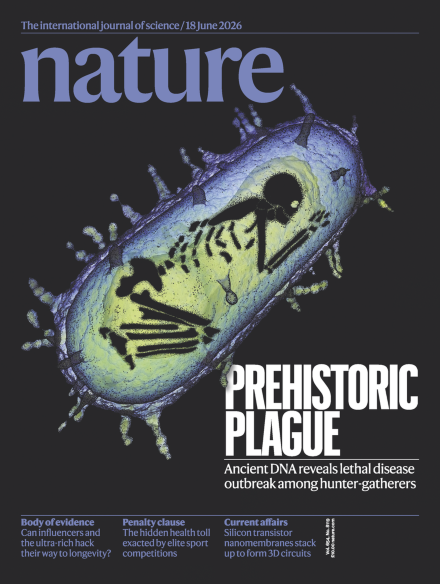
A research article (and the cover) on a plague outbreak near Lake Baikal—over which I could have flown when reading this issue, except that flights to Japan now contour the territories of the invader of Ukraine—that occurred about 5,500 years ago and impacted a community of hunter-gatherers, In a sparsely populated area, marmots being the likely primary vectors, and a close phylogenetic proximity to current strains.

a journal of the Hugo year (bis)

Posted in Books, Kids, Mountains, pictures, Running, Travel, University life, Wines with tags , , , , , , , , , , , , , , , , , , , , , , , , on July 12, 2026 by xi'an


R
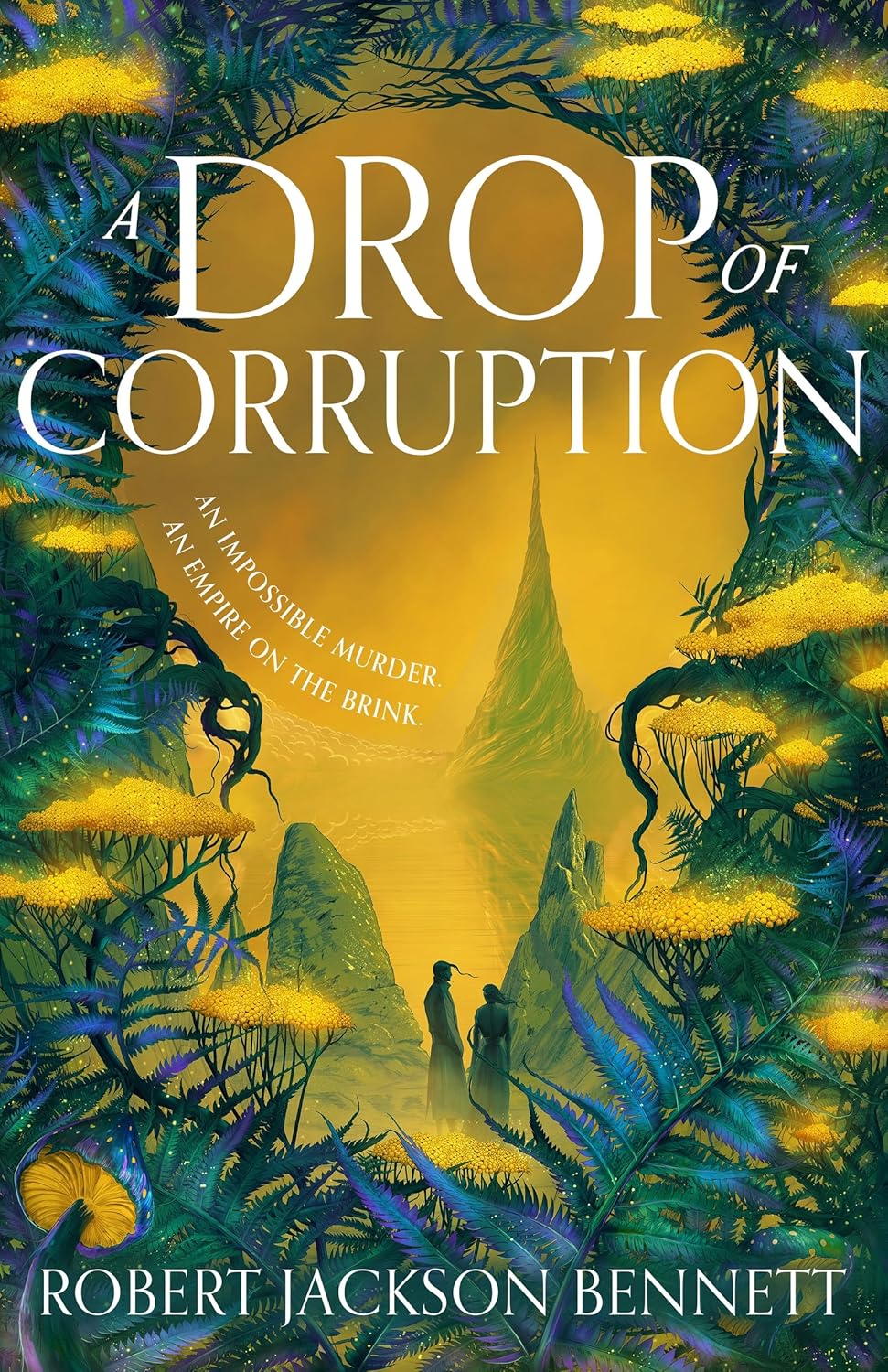
ead another Hugo best novel contender, A Drop of Corruption, by  Robert Jackson Bennett, although I had to buy it since it was not part of the LACon package. (At a negligible price for Kindles on Amazon.) Even had it been out of the shortlist, I would have read this book as soon as I became aware of its existence! At this stage of my reading through the shortlisted novels, it figures at the top. It continues on the highly original construct in volume #1, with enough originality in the structure of the land, the organisation of the Empire, the role of leviathans as providers of drugs and treatments, and the past story of both investigators, Ana and Din. The idea of the Shroud is brilliant and having to wait for hundreds of pages to get an insider’s view so frustrating! The hunt for the central villain runs the entire book and the omniscient character feels a bit over-stretched at times, with much infodump, but the final impressions I got from this fantastic book remain highly positive and I am eagerly looking forward the incoming third volume.
Cooked mostly cold salads to cope with the heat waves, except for a batch of vegetable samosas to make use of leftover filo pastry and ageing potatoes. And repeated bowls of rhubarb preserve since this is the time of year when they are readily available at the local market. On said market, my favourite fishmonger gave me a monkfish liver just to try and it proved quite the delicacy, while easy to prepare.

Watched Season 3 of Night Agent, the Bournesque Secret Service action series, which is as addictive as a bowl of peanuts!, despite the many suspensions of belief required by the convenient coïncidences and the repeated red herrings. Possibly better than Season 2 thanks to the depth of several characters.