When I climbed in Luminy last year, one of the ways was called le théorème de l’engambi. Looking on the internet, I found this was the title of a book written by a local, Maurice Gouiran. The other evening, at the airport, the book was on sale in the bookstore, so I bought it and read it in the plane back to Paris. It is a local crime novel with highly local characters (to the point I do not understand all they say), local places like l’Estaque, the OM football club, La Gineste, Luminy, and what is apparently the most appealing theorem in novels, Fermat’s last theorem! (Engambi means messy affair in local dialect.) Overall the book is more pleasant to read for the local flavour than for the crime enquiry per se, especially because it involves scenes that take place in CIRM itself (including the restaurant and the terrace outside under the old oaks!). There is of course no indication on the nature of the three page proof produced by the first corpse of the book, but the description of the mathematical community is rather accurate, overall. The author mentions in a postnote that he is aware of Wiles’ proof, but believes (as a poet) in an alternative proof that Fermat had really found. (This book is not to be confused with Guedj’s parrot theorem, which is a novelesque story of mathematics, even though it ends up on the same premise that a parrot could recite Fermat’s proof…)
Archive for Fermat
le théorème de l’engambi
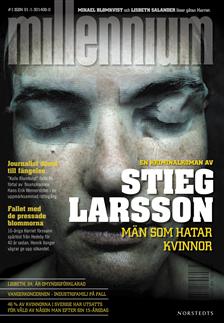
Posted in Books, Statistics with tags Andrew Wiles, book review, CIRM, Fermat, Luminy, Marseille, Maurice Gouiran, Morgiou on May 20, 2011 by xi'anThe Millennium Trilogy (tome 3)
Posted in Books with tags book review, Fermat, Millennium trilogy, Stieg Larsson, Sweden on June 26, 2010 by xi'an“Trinity and Bob the Dog devoted the best part of a week to identifying and separating out Ekström’s mobile from the background noise of about 200,000 other mobile telephones. They used a technique called Random Frequency Tracking System.” Stieg Larsson, The Girl who kicked the hornets’ nest

“Plague ran Ekström’s digitized voice through a program called V.P.R.. When he had five separate examples of a word, he charted it with respect to the time it took to speak the word, what tone of voice and frequency range it took to speak the word, and a dozen other markers. The result was a graph.” Stieg Larsson, The Girl who kicked the hornets’ nest
This last novel has several interesting literary features but still shares many of the defects of the previous volumes. For instance, the poor habit of launching into useless descriptions. This time, instead of the unabridged Ikea catalog, we are given the complete tour of the home protection company…  Similarly, the sudden relation of Blomkvist with a policewoman has been announced by red flags for dozens of pages in advance (even though it is quite a hilarious tryst!). The gun-battle in the restaurant is rather implausible, even though its role in the plot is meaningful. Maybe the least convincing part of this plot is the counterstrike at the secret cell within the National Security Agency, S.I.S., coming from the same agency but from “good” agents, as they manage to dismantle a well-organised if small secret unit that has been operated for fifty years in complete anonymity. The pace at which this reaction of the legal side takes place is gripping and helps very much at making the book addictive!, but I feel the story is stretched quite thin at this stage. The [bad] secret [secret] agents are also a bit too stupid to have survived fifty years of this regime, while Blomkvist’ lawyer sister is [again] too smart for the defence of Salander (even thought the availability of hard proofs like Burjman’s video are a big help!)…
“She opened the door wide and let him into her life again.” Stieg Larsson, The Girl who kicked the hornets’ nest