Archive for George Casella

author rank

Posted in Statistics with tags , , , , , on October 11, 2012 by xi'an

Got the following email from Amazon:

Today we have added a new feature, Amazon Author Rank, the definitive list of best-selling authors on Amazon.com. This list makes it easy for readers to discover the best-selling authors on Amazon.com overall and within a selection of major genres. Your Amazon Author Rank is 44,881 in Print Books.

It is a new feature so, with a very limited past horizon, this rank seems to be moving wildly! (For instance, it is now 36,776, just a few hours later.) But so are the individual book sales. Hence a clear lack of smoothing in the indicator.

Another interesting feature of this Author Central facility is the display of US sales by district, Not only because it shows that New York and San Francisco are the cities where I sell the most books (great!) but also because it uses the notion of “combined areas”, aggregating “the copies sold in these sparsely populated areas in order to obscure any single retailer’s sales”. A good display of data protection (even though the level of aggregation sounds too high to me, resulting in “combined areas” being the 3rd highest sale area. And including Gainesville, Florida and Ithaca, New York, the two latest locations of George Casella, in this combination!

a paradox in decision-theoretic interval estimation (solved)

Posted in pictures, Statistics, Travel, University life with tags , , , , , , , , , , , on October 4, 2012 by xi'an

In 1993, we wrote a paper [with George Casella and Gene/Juinn Hwang] on the paradoxical consequences of using the loss function

\text{length}(C) - k \mathbb{I}_C(\theta)

(published in Statistica Sinica, 3, 141-155) since it led to the following property: for the standard normal mean estimation problem, the regular confidence interval is dominated by the modified confidence interval equal to the empty set when s² is too large… This was first pointed out by Jim Berger and the most natural culprit is the artificial loss function where the first part is unbounded while the second part is bounded by k. Recently, Paul Kabaila—whom I met in both Adelaide, where he quite appropriately commented about the abnormal talk at the conference!,  and Melbourne, where we met with his students after my seminar at the University of Melbourne—published a paper (first on arXiv then in Statistics and Probability Letters) where he demonstrates that the mere modification of the above loss into

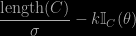
\dfrac{\text{length}(C)}{\sigma} - k \mathbb{I}_C(\theta)

solves the paradox:! For Jeffreys’ non-informative prior, the Bayes (optimal) estimate is the regular confidence interval. besides doing the trick, this nice resolution explains the earlier paradox as being linked to a lack of invariance in the (earlier) loss function. This is somehow satisfactory since Jeffreys’ prior also is the invariant prior in this case.

back from down under

Posted in Books, pictures, R, Statistics, Travel, University life with tags , , , , , , , , , , , , , , on August 30, 2012 by xi'an

After a sunny weekend to unpack and unwind, I am now back to my normal schedule, on my way to Paris-Dauphine for an R (second-chance) exam. Except for confusing my turn signal for my wiper, thanks to two weeks of intensive driving in four Australian states!, things are thus back to “normal”, meaning that I have enough of a control of my time to handle both daily chores like the R exam and long-term projects. Including the special issues of Statistical Science, TOMACS, and CHANCE (reviewing all books of George Casella in memoriam). And the organisation of MCMSki 4, definitely taking place in Chamonix on January 6-8, 2014, hopefully under the sponsorship of the newly created BayesComp section of ISBA. And enough broadband to check my usual sites and to blog ad nauseam.

This trip to Australia, along the AMSI Lectures as well as the longer visits to Monash and QUT, has been quite an exciting time, with many people met and ideas discussed. I came back with a (highly positive) impression of Australian universities as very active places, just along my impression of Australia being a very dynamic and thriving country, far far away from the European recession. I was particularly impressed by the number of students within Kerrie Mengersen’s BRAG group, when we did held discussions in classrooms that felt full like a regular undergrad class! Those discussions and meetings set me towards a few new projects along the themes of mixture estimation and model choice, as well as convergence assessment. During this trip, I however also felt the lack of long “free times” I have gotten used to, thanks to the IUF chair support, where I can pursue a given problem for a few hours without interruption. Which means that I did not work as much as I wanted to during this tour and will certainly avoid such multiple-step trips in a near future. Nonetheless, overall, the own under” experience was quite worth it! (Even without considering the two weeks of vacations I squeezed in the middle.)

Back to “normal” also means I already had two long delays caused by suicides on my train line…

George Casella ISBA 2012 memorial

Posted in pictures, Running, Statistics, Travel, University life with tags , , on June 28, 2012 by xi'an

”Death is but crossing the world, as friends do the seas; they live in one another still.
For they must needs be present, that love and live in that which is omnipresent.
In this divine glass, they see face to face; and their converse is free, as well as pure.
This is the comfort of friends, that though they may be said to die, yet their friendship and society are, in the best sense, ever present, because immortal.”
—
William Penn, Fruits of Solitude—

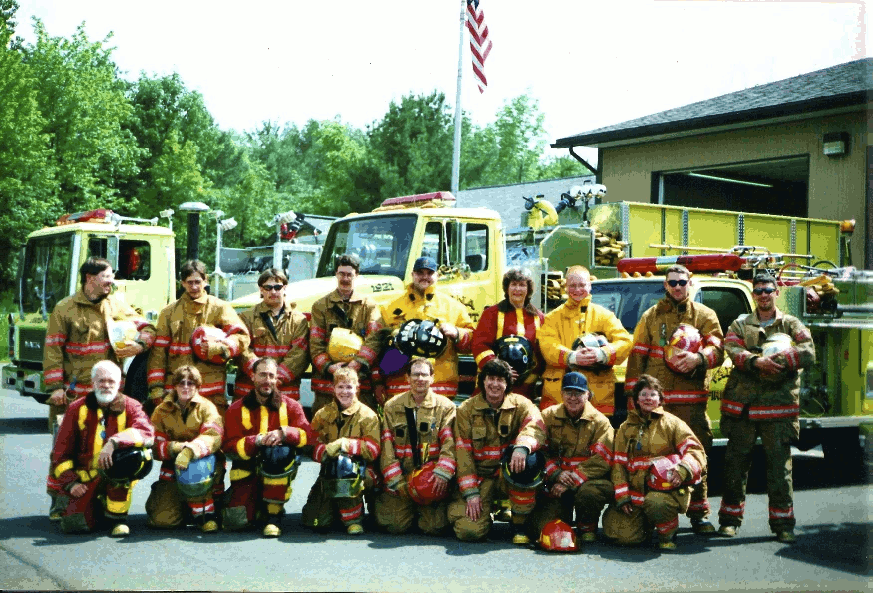
Yesterday, we had the memorial session for George at ISBA 2012. A lot of his friends were there, as well as well as persons who had had a interaction with George, either directly or by reading one of his books. We showed the slideshow prepared by Sarah, George’s daughter, for the memorial in Gainesville and edited by Ed George for a few more captions. Ed read the moving eulogy he had prepared for last week. And then people came to the desk to give testimonies on how they interacted with George and how they had been impacted by this interaction… Above is the poem read by Rebecca Steort as a tribute to George, poem which beautifully sums up our feelings.  Thanks to the organising committee, and in particular to Genya Kobayashi, the memorial was filmed and I hope to get it on line once I am back in Paris, as well as forward it to Anne, Sarah and Ben Casella, as a message of loving support and admiration from all those present at the session. (The above picture was taken in Varna, near Ithaca, when George was the captain of a truck in the volunteer Fire Department. He engaged in this activity as intensely as in any activity he was taking part in, getting through certifications and keeping a pager on at all times but when teaching for emergencies.)

ISBA 2012 [#1]

Posted in Mountains, pictures, Running, Statistics, Travel, University life with tags , , , , , , , , on June 26, 2012 by xi'an

The empirical likelihood session was the first one I attended in the morning. As I had slept fairly little the past night, I had alas trouble (more than usual!) to stay awake during the talks! They covered the application of a mix of empirical likelihood and Bayesian tools to missing data and survey data. My overall impression is however that there was not much and not enough discussion about the validation of the approach, i.e.~in connection with my lecture of the previous day, whether or not it was Bayesian, and whether or not it leads to a coherent type of inference, albeit asymptotically.

The following session was ABC #1 that I organised, with Scott Sisson chairing. As a biased organiser, I though it went on well and presented some current viewpoints on model choice and summary statistic selection, all of which have been discussed on this ‘Og! In particular, Dennis Prangle exposed his extension of the Read Paper to the model choice issue, raising interesting questions about the notion of sufficiency in this setting. Similarly, Chris Drovandi discussed the choice of pseudo-model in indirect inference, using a model fit as the selection tool, which does not seem an obvious solution to me as what matters is rather the different behaviour of the corresponding estimator in a collection of models…

After a very pleasant lunch with Ed George in what sounded like a very local and secluded restaurant, where we prepared tomorrow’s memorial session by mostly exchanging stories and memories about George Casella, I went to the adaptive Monte Carlo session, where exhaustion got the better of my genuine interest in the topic (despite Pierre prodding me awake from time to time!)… The more relevant my call for contributions to those impressions of ISBA 2012 from all volunters!