Archive for LLM

Nature tidbits [06 Nov 2025]

Posted in Books, Kids, pictures, Travel with tags , , , , , , , , , , , , , , , , , , , , , , , , , , , , , , , , , , , , , , , , , , on January 3, 2026 by xi'an

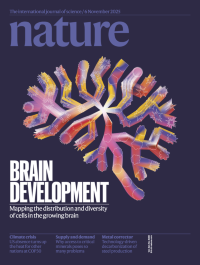
In this issue of Nature (I read on my way to Warwick), a pre-COP30 tribune, to be opposed to later issues!, with a positive take on the impact of the Trump Administration ignoring the conference, with the advances made by China and India (with a surprising 50% of “installed electricity generation capacity coming from non-fossil sources”, if more critical on Brazil’s efforts than the subsequent tribune by the Brazilian undersecretary for ecological transformation for environment, plus a tribune on the ambiguous terms used by countries to secure access to “critical” minerals, in tune with the on-going muscle-flexing attitudes of China and the US. Although the comment is more focussing on the universal access to minerals than to the protection of the workers extracting it and to the environmental impact of it. Followed though by another comment on the climate impact(s) on mining as (no longer) extreme weather events hinder mining all over the (mining) world.

A reflection on China’s 5y plan for science and its reaching a $500 billion annual investment in R&D, predicting (with a large confidence margin) that it will become the #1 power in sciences and technology in the coming decade. I am actually surprised that China has not yet achieved this goal for semi-conductors. And a tribune on the mixed signal of Takaichi Sanae becoming Japan’s first female prime minister, for science as a whole and for gender equity. (My take being that her having UK’s first female prime minister, Margaret Thatcher, as a role-model is not particularly promising. Just like the projection of Marine Le Pen on the verge of becoming France’s first female president does not carry any optimistic message!)

A light entry on a chemical analysis of the specifics of koti luwak (or civet coffee) that does not tell much, beside civet  digestion  adding caprylic and capric acids making beans lower in proteïns and higher in fat. Not yet reaching the goal of “leaving the animals out” from producing this luxury coffee ($75 a cup!).

An article on the shrinking number of US PhD admissions (in some colleges) conflicting with another article in a later issue of a stable influx. And a rather shallow article on the creativity or lack thereof of AI, along with the high sycophancy of LLMs,  to be opposed to a thoughtful reflection on how AI is radically changing the PhD experience and focus, if almost shelving statistics as a thing from the past! But insisting on graduates keeping their ability to check for the validity of their (AI’s)  statistical conclusions!! And another entry on the systematic dismantling of US federal scientific agencies like EPA, CDC, NASA, NOOA, NIH, &tc., by Trump -2.0, which beyond terminating staff contracts in huge proportions is culling the independence of these agencies. With generational impacts on science, training, and evidence-based policies.

A Where I work column featuring a pangolin treated by a Singapore vet, Charlene Yeong. (Unfortunately said pangolin was euthanised after the surgical intervention.) And a book review on the background and motivations of Francis Crick,  just prior to his collaborator James Watson passing away. As noted by the author, Cobb, as MRC staff and later non-resident fellow of the Salk Institute for Biological Studies in San Diego,  “Crick never had to teach or grapple with university administration: he applied for a grant only once in his life.” And concludes that he was not a saint or a hero but “an extraordinarily clever man with limits to his interests and perception”.

the Harvard and Brown school of computer science

Posted in Books, Statistics, Travel, University life with tags , , , , , , , , , , , , , , , , , , , , , , , , , , , , , , on October 2, 2025 by xi'an

 “In the late 1980s, LeCun, then a researcher at AT&T Bell Labs, developed a powerful neural network that learned to recognise handwritten zip codes by training on thousands of examples. A parallel development soon unfolded at Harvard and Brown. In 1995, Zhu and a team of researchers there started developing probability-based methods that could learn to recognise patterns and textures (…) and even generate new examples of that pattern. These were not neural networks: members of the “Harvard-Brown school”, as Zhu called his team, cast vision as a problem of statistics and relied on methods such as “Bayesian inference” and “Markov random fields”. The two schools spoke different mathematical languages and had philosophical disagreements. But they shared an underlying logic – that data, rather than hand-coded instructions, could supply the infrastructure for machines to grasp the world and reproduce its patterns – that exists in today’s AI systems such as ChatGPT.” 

ERC postdoc position on scalable experimental design, in Oxford, UK

Posted in Statistics, Travel, University life with tags , , , , , , , , , , , , , , , , on August 8, 2025 by xi'an

against modern sl[AI]very

Posted in Kids, R, Statistics, University life with tags , , , , , , , , , , , , , , , on July 2, 2025 by xi'an

a journal of the chaos (en cuisine) year

Posted in Books, Kids, Mountains, pictures, Travel, Wines with tags , , , , , , , , , , , , , , , , , , , , , , , , , , , , , , , , , , , , , , , , , on June 12, 2025 by xi'an

 Read La Fille du Grand Hiver (The Daughter of the Great Winter) by Isabelle Autissier (also a sailor who was the first woman to complete a solo world race in 1991). This is a novelised version of the story of Arnarulunguaq, who accompanied Knud Rasmussen on the Fifth Thule Expedition over several years, all the way to the Bering Strait. She died of tuberculosis the year after. (And will appear on a Dane banknote soon.) The novel is told from Arnarulunguaq‘s perspective, as she opens to wider possibilities, cultural diversity, and traces back her Inuit lineage along Knud Rasmussen. It is a beautiful travel story (and then some more), in the fascinating Far North, which further reminded me of a catholic missionary visiting our primary school in the mid  1960’s and giving a conference on the Inuits and their culture. I pressed my parents until they bought his book and read it over and over, probably the seed of my fascination for the Far North!

Mis-made both a vat of rice pudding—presumably by first grinding the rice grains as the whey did not get absorbed—and a vat of chocolate mousse!—by not melting the chocolate long enough—and another of vegan mousse—by failing to notice the chickpea water was salted and that my MIL’s egg-beater was broken (but I salvaged it into a decent mole, if not with 49 ingredients)! I also grilled panned hot chilis I had found on a local market, but they were so hot they made me cough and open all windows; they are now resting in an olive oil jar, to be soon tested!!! Rhubarb is back in the stalls of my local market, providing me with my breakfast spread for the coming weeks. I again enjoyed Toukoul’s dora wat on the night of the privaCI workshopt—a workshop that focussed almost entirely on contextual integrity, if with very little overlap with the BIRS workshop in Kelowna. And harvested as many cherries as possible from our fruitful (!) cherry tree (#1) before the local birds are them all.

Watched Black Doves, with (Bend it Like Beckham) Keira Knightley as the only recognisable actress in the set, a very cartoony spies series taking place in London at Xmas time, with funny dialogues and too good vibes that should restrict a viewer to watching the show on 24 December and no other day.