
Archive for not a book review
Bayesian inference from the ground up [no book review]
Posted in Books, Kids, Statistics, University life with tags Archimedes death ray, Bayes theorem, Bayesian Inference for Psychological Science, Bayesian inference from the ground up, Bayesian textbook, Bayesian Thinking for Toddlers, book cover, Buffon's needle, E.J. Wagenmakers, French history, Jardin des Plantes, not a book review, Paris, University of Amsterdam on November 7, 2023 by xi'an
Speculations Concerning the First Ultraintelligent Machine [not a book review]
Posted in Books, Statistics, Travel with tags Advances in Computers, AI, artificial intelligence, Bayesians, Bletchley Park, book review, Britain, doomsday argument, Eurostar, high speed train, I.J. Good, New Statesman, not a book review, Speculations Concerning the First Ultraintelligent Machine on November 6, 2023 by xi'an
COVID by numbers [not a book review]
Posted in Books, Kids, Statistics with tags alcoholism, China, COVID-19, David Spiegelhalter, fact-checking, NHS, not a book review, pandemic, The Observer, United Kingdom on October 13, 2021 by xi'an David Spiegelhalter and Anthony Masters have made a book out of their COVID related columns in The Observer. Here are ten key figures extracted from that book:
- The UK was hit by more than 1,000 separate outbreaks (…) [with] far more imports of Sars-CoV-2 from France, Italy and Spain than from China
- Reported Covid deaths depend on the day of the week (due to delayed reporting, and a weekend effect, but smoothing is very rarely applied)
- In the first year of Covid, over-90s had 35,000 times the risk of dying of Covid-19 as young children (with no relevance of the figure per se since an extra death of a young child would have moved it from 35,000 to 32,000, since there were thankfully so few deaths of young children)
- 2020 saw the highest number of deaths since 1918 in England and Wales (even when correcting for population increase or population ageing)
- The UK has led the World in testing Covid treatments (like dexamethasone and hydroxychloroquine, thanks to the centralised NHS, making me wonder why France with another centralised and public health structure was not able to do the same)
- People who have died with Covid have on average lost about 10 years of life (contrary to the authors’ intial hunch, and mine as well, to oppose to the less relevant loss of life expectancy across the entire population)
- Most people died “of” Covid rather than “with” it, but most have also had other medical conditions (with 91% of pre-COVID conditions)
- Alcohol consumption stayed the same during lockdown (which came as a surprise, given the general feeling for the opposite, and still as a worrying indicator of alcoholism)
- Most people with Sars-CoV-2 don’t infect anyone (which would need more details, as the figure should be weighted by the base probability to infect someone)
- The pandemic has been a net lifesaver for young people (with 300 fewer deaths for 15-29 year old, but it also has had a potentially negative impact on their life expectancy).
sale été pour la BD
Posted in Books, Kids with tags BD, l'Écho des Savanes, not a book review on September 6, 2021 by xi'anThree BD authors died this summer, Raoul Cauvin, Nikita Mandryka, and Benoît Sokal…


Our Lady of the Van
Posted in Books with tags Britain, Camden Town, film review, London, Maggie Smith, not a book review, The Lady in The Van, van on March 14, 2021 by xi'an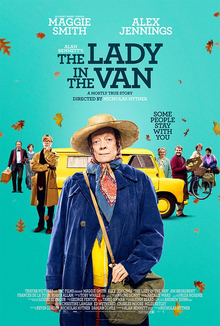 As I came across this Lady in the van film on a lazy evening, I gave it a go since it featured Maggie Smith, London, and apparently an eccentric homeless old-lady. Afterwards, since I was somewhat reserved about the story and the plot, if not by Smith’s and Jennings’ acting, and surprised at the highly positive reviews it received. I looked at the background, only to discover that this was a slightly modified version of a real story where the English writer Alan Bennett let Margaret Fairchild live in a van on his property, in Northern London, in the 70’s and 80’s, until she died in 1989. If ignoring the heavy pathos permeating the film throughout to concentrate on the (light) social criticism of the bo-bo Gloucester Crescent residents and on the very British satire behind essentially every character, first and foremost the writer himself, there are some enjoyable aspects. But I remain perturbed by the somewhat exploitative way Bennett turned this story into a 1989 essay, then a 1990 book, then a 1999 play (already involving Maggie Smith), and a 2009 BBC radio play, before adapting the play for the film. And somewhat shocked that over 15 years Margaret Fairchild was let to live in such conditions. In a rusted van, in the middle of London…


