Archive for philosophy of sciences

Seminar of philosophy of mathematics [slides]

Posted in Books, pictures, Statistics, University life with tags , , , , , on November 22, 2010 by xi'an

The first version of my slides for the Seminar of philosophy of mathematics at Université Paris Diderot, in ten days, is completed. I recycled some of the slides I had done for the debate in Rimini more than a year ago, since they included quotes from different perspectives on what model choice and testing should be. However, I removed completely the computational side and included instead some comments on the ABC controversy and from my recent review of Murray Aitkin’s Statistical Inference.


Seminar of philosophy of mathematics

Posted in Books, Statistics, University life with tags , , , , on November 18, 2010 by xi'an

Following in the steps of Andrew last year, I will make a presentation in the seminar of philosophy of mathematics (and statistics!) of Université Paris Diderot, in about two weeks (November 30, 9am/6pm, Université Paris Diderot – Site Rive Gauche, Bâtiment Condorcet 4, rue Elsa Morante, 75013, Paris.). Here is my abstract, the slides will come later:

Classical Bayesian model selection, alternatives and criticisms Christian P. Robert (Université Paris-Dauphine, Institut Universitaire de France and CREST)

I will cover the most orthodox approach to Bayesian model selection, followed by alternatives that have been recently proposed in the literature and by a description of an on-going controversy with phylogeneticists about the nature of testing.

Meaning that I will draw from my recent reading of Aitkin’s book, as well as from the controversy with Templeton.

JSM 2011

Posted in Statistics, Travel, University life with tags , , , , , , , on September 20, 2010 by xi'an

We are hardly back from JSM 2010 and we have to think forward to JSM 2011! On Saturday morning I got both news that the session I had proposed on behalf of ISBA was accepted by the ASA as an invited session on Bayesian Model Assessment (with Merlise Clyde, Andrew Gelman, Feng Liang and Jean-Michel Marin) and that the session on Controversies in the philosophy of Bayesian statistics proposed by Andrew Gelman, in which he had kindly invited me (along with Jim Berger, Rob Kass and Cosma Shalizi), was also accepted as an invited session. (I am not particularly attracted by the beaches of Miami!, but JSM is a good opportunity to interact with north America statisticians and to gather some of the on-going trends in the field…)

Rehab!

Posted in Statistics, University life with tags , , , , on June 24, 2010 by xi'an

I had altogether forgotten about my request, sent on April 29,

Dear arXiv moderator,
I would like to ask for a reinstatement of my 1004.5074 within the stat.ME category as it has nothing to do with applied statistics. The book by Sober and hence my critical reading is about the philosophy of testing (or evidence) and hence relates to the foundations of statistics, which I think are within the stat.ME (or stat.TH?) category.
Thank you for your attention,
Sincerely, X.

and then yesterday I received this email

Our moderators have considered your appeal and have agreed to reclassify your article as stat.ME (Methodology) with cross-lists to stat.TH (Theory) and q-bio.PE (Populations and Evolution). No further action is required on your part.
arXiv moderation

Not that it mattered that much, but being put into the “wrong” group meant that less people were likely to get a look at this review. Overall, I keep being impressed by the efficiency of the arXiv service. (Maybe also because it is housed by my alma matter Cornell University).

Evidence and evolution (5)

Posted in Books, Statistics with tags , , , , , , , , , , , , on April 29, 2010 by xi'an

“Tout étant fait pour une fi n, tout est nécessairement pour la meilleure fi n. Remarquez bien que les nez ont été faits pour porter des lunettes, aussi avons-nous des lunettes.” Voltaire, Candide, Chapitre 1.

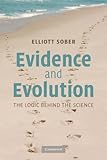
I am now done with my review of Sober’s Evidence and Evolution: The Logic Behind the Science, Posting about each chapter along the way helped me a lot to write down the review over the past few days. Its conclusion is that

Evidence and Evolution is very well-written, with hardly any typo (the unbiasedness property of AIC is stated at the bottom of page 101 with the expectation symbol E on the wrong side of the equation, Figure 3.8c is used instead of Figure 3.7c on page 204, Figure 4.7 is used instead of Figure 4.8 on page 293, Simon Tavaré’s name is always spelled Taveré, vaules rather than values is repeated four times on page 339). The style is sometimes too light and often too verbose, with an abundance of analogies that I regard as sidetracking, but this makes for an easier reading (except for the sentence “the key to answering the second question is that the observation that X = 1 and Y = 1 produces stronger evidence favoring CA over SA the lower the probability is that the ancestors postulated by the two hypotheses were in state 1”, on page 314, that still eludes me!). As detailed in this review, I have points of contentions with the philosophical views about testing in Evidence and Evolution as well as about the methods exposed therein, but this does not detract from the appeal of reading the book. (The lack of completely worked out statistical hypotheses in realistic settings remains the major issue in my criticism of the book.) While the criticisms of the Bayesian paradigm are often shallow (like the one on page 97 ridiculing Bayesians drawing inference based on a single observation), there is nothing fundamentally wrong with the statistical foundations of the book. I therefore repeat my earlier recommendation in favour of Evidence and Evolution, Chapters 1 and (paradoxically) 5 being the easier entries. Obviously, readers familiar with Sober’s earlier papers and books will most likely find a huge overlap with those but others will gather Sober’s viewpoints on the notion of testing hypotheses in a (mostly) unified perspective.

And, as illustrated by the above quote, I found the sentence from Voltaire’s Candide I wanted to include. Of course, this 12 page review may be overly long for the journal it was intended for, Human Genetics, in which case I will have to find another outlet for the current arXived version. But I enjoyed reading this book with a pencil and gathered enough remarks along the way to fill those twelve pages.