a journal of the nipponholic year

Posted in Books, Travel, Wines with tags , , , , , , , , , , , , , , , , , , , , , , , , , , , , on November 17, 2026 by xi'an

Read Les évaporés du Japon, by Léna Mauger. A journalist investigates the jōhatsu, literally “evaporated people” in Japan, through a series of interviews in the off-the-grid places where they start a new life. The phenomenon is interesting as a societal fact and intriguing in its numbers. However, the investigation stays fairly low-level and sticks to these interviews, with no deeper perspective than blaming the culture of uniformity (出る杭は打たれる, “the nail that sticks out gets hammered down”). The style is overly personal, indulging in the impressions and opinions of the author in an old-fashioned Libé or Actuel way. The book may also overemphasize a rather minute aspect of Japanese culture…

Read Le Nouveau (新参者), by Keigo Higashino. This is a very good detective novel that doubles as a tour of a Tokyo neighbourhood, Nihonbashi, going from shop to shop. The style is rather original, as the book is a succession of portraits that match the progress of the investigation. The motive for the murder is a bit weak, but the main character, Kaga, is endearing, a Japanese version of Detective Columbo. It is very different from The Devotion of Suspect X, which I enjoyed even more (back in 2013, just before the Accident!).

Gave up on Nona the Ninth, the third volume of Tamsyn Muir’s Locked Tomb series. The story makes no sense and exploits the psychological issues of the main character so extremely that it loses all connection with the previous volumes, Harrow the Ninth being already quite… harrowing! Most of the book is seen through the eyes of Nona, a childlike consciousness occupying a body the reader is supposed to recognise. It is interleaved with flashback chapters about the origins of the Empire, written in another register altogether. Characters from the earlier books reappear under new names or in other bodies, with no clear indication of who is who, or why it matters. The plot is buried under in-jokes and allusions that only a devoted reader could decode. As a result, I kept turning pages without any idea of where the story was heading… Gave up as well on Alchemised, which draws so obviously on all the tropes of the genre that it could have been written by an AI, were it not for the timeline, since it started as a (Harry Potter) fan fiction several years before the advent of chatbots! The catalogue is complete!, with an amnesiac heroine held captive after a lost war, a brooding and cruel captor with a hidden tender side, memories excavated by force, a regime of evil necromancers… None of these items is developed beyond its stock version. The alchemy of the title amounts to a vague magic system that never acquires consistent rules. The world-building remains thin, the prose is flat and repetitive, with the same emotional beats recurring over and over across a monster book that would have gained from losing half of its pages. I was once more uncomfortable with the way the abuse inflicted on the heroine is aestheticised as a prelude to romance. That the book became a bestseller says more about the current state of “romantasy” publishing than about its literary qualities.

Cooked a Guatemalan/Gelmanian lunch of frijoles negros, simmered black beans with onions and tomatoes, served with fresh corn tortillas. The tortillas were patted by hand from masa harina and cooked on a crêpe pan. Raw sliced tomatoes from the market on top. It was a simple, filling lunch before heading to the Fall Classics recipes.

Watched The Greatest Teacher on Netflix. On graduation day in a Japanese high chool, a teacher is pushed down the stairs by one of her students, and she wakes up a year earlier determined to find out who did it. My feelings about it were mixed. The first episodes hooked me, but the series soon becomes a string of public confessions in front of the whole class, one student per episode. Bullying, family abuse, self-harm and online harassment are each brought up, “solved” in a tearful monologue, and then dropped. That felt close to exploiting teenagers’ problems for cheap drama. The depiction of the rest of the teaching staff was also disappointing, since they come across as indifferent, cowardly or incompetent, leaving the lone heroïc teacher to carry everything. Even allowing for the genre, this seemed both unfair and unconvincing.

freedom to study AND freedom to demonstrate

Posted in Books, Kids, University life with tags , , , , , , , , on November 16, 2026 by xi'an


A relevant—if lacking in practical propositions—tribune in Le Monde stressing that the freedom to study (and to teach) has been mostly forgotten in the French blockades of universities in the past weeks. (With Paris Dauphine reopening the week of 02 November.) Both lawyers stress that students and staff are free to demonstrate and strike but not to block access to universities or occupy its premises. And that blockades impose the opinion of a component of the university community to the whole. The recurrent argument against any police intervention on a blocked campus is set in the Middle Ages privilegium scholasticum which makes as little sense nowadays as the medieval asylum ecclesiasticum…

semi de Boulogne 2026

Posted in pictures, Running with tags , , , , on November 15, 2026 by xi'an

virtual yeast and real migrants [Nature, 2 July]

Posted in Books, Statistics, Travel, University life with tags , , , , , , , , , , , , , , , , , , , , on November 14, 2026 by xi'an

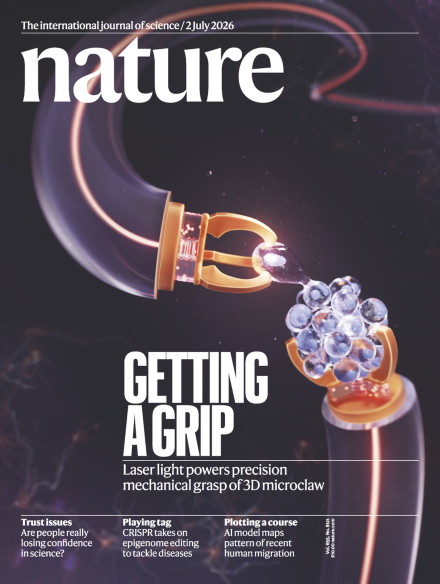
The 2 July issue of Nature—that stayed under a pile of unread journals after my return from Japan—came with (a nice cover about a 38 micrometer claw! and) an article I found quite exciting from a statistical perspective, namely a “deep learning of human migration”, a reconstruction of global migrations in the past decades. It estimates yearly migration flows between 230 countries and territories from 1990 to now, using an ensemble of deep recurrent neural networks fed with 18 geographic, economic, cultural and political covariates (and INSEE data). The headline figure is that global migration went from about 13 million people a year in 2000 to around 35 million in 2023. But the news & views comment questions the ultimate utility of the outcome in identifying new trends and keeping track of (rapidly changing) migration channels. On top of this article:

a feature, backed by an Editorial, goes against the grain of the “trust in science is collapsing” narrative. A large survey, nearly 72,000 people in 68 countries in 2022–23, gives an average trust score of 3.6 out of 5. The cracks are located rather than general. In Britain, trusting science “a lot” fell from 63% in 2020 to 34%, but in the US, confidence in scientists even among Republican-leaning respondents only fell from 85% in 2020 to 65% in 2025, while Democrats barely moved. I liked the point that some studies find that admitting uncertainty makes scientific information look more trustworthy than overconfident statements do. Much less that YouTube and similar platforms were the main source of science information. In the same issue, a World view on scientists acknowledging their own political biases, and a comment with six ways to bring the public into science and policy.)

Then another news piece on “Is AI ruining our skills?”. Unsurprisingly, early evidence says yes. with 70% of US nurses and 77% of US physicians worried about losing skills through over-reliance on AI. One researcher puts it nicely: users perform well because they are “borrowing skills from the AI” without acquiring them. The GPS comparison is made too, and I can vouch for that one personally. Whether students who never derived a Gibbs sampler by hand will ever realise when it fails is a question solved at exam time…

The books & arts section reviews The Political Economy of Rwanda’s Rise by P Behuria  (open access on Cambridge Core). Covering Rwanda’s attempt to rebuild its economy after the 1994 genocide into one of the fastest-growing in Africa as a regional services hub. But the authoritarian nature of Kagane’s regime and its involvement in rebel groups in Eastern Congo may put the brake on this development…

And to conclude on a lighter note, a perspective “Towards the construction of a virtual yeast”. It sounds like a digital twin of S. cerevisiae, build from eight functional modules, each with a dedicated AI tool, and a large language model to coordinate them, with active experiments closing the loop. I wonder whether this virtual yeast could help in my prospective sourdough project, but this will need wait another few years!

je me souviens…

Posted in Kids, pictures, Travel with tags , , , , , , , , , , on November 13, 2026 by xi'an